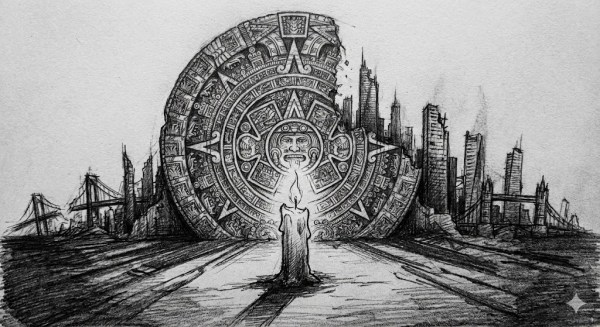
The Mirror of Apocalypse: Understanding Our Fears

The apocalypse isn’t just a genre. It’s a mirror.

From the moment we figured out time moves ahead, we’ve been obsessed with the moment it stops. We gather around a campfire sharing myths. Or, we doom-scroll on Twitter/X. Humanity has a strange, persistent hobby: we love rehearsing our own extinction.

As I’ve dug into this research for my blog, I’ve made discoveries. It has fuelled the concepts behind Nebula Arcana. I’ve realized that the “End” is rarely about death. It’s a diagnostic tool for the living. The monsters we invent are jaguars, floods, or AIs. They tell us exactly what we are afraid of right now.

Here is a tour through the architecture of the end: and why we can’t look away.

1. The Universe as a Buggy Software Update

If you think the world feels unstable today, you should see the Aztec maintenance schedule.

In the West, we view time as a straight line: start at Creation, end at Judgment. But for the Aztecs, the apocalypse wasn’t a future event: it was a recurring operational hazard. They believed we are living in the era of the Fifth Sun. The earlier four? Already destroyed.

And the techniques of destruction were terrifyingly specific:

  • Jaguars ate the first generation (giants).
  • Hurricanes wiped out the second (survivors turned into monkeys).
  • Fire rain ended the third.
  • A 52-year flood dissolved the fourth.

For the Aztecs, the universe was fragile. It required constant “fuel” (sacrifice) to keep the sun moving. If they stopped, the framework crashed. It’s a distinct contrast to the Hindu concept of time, which is less about fragility and more about unimaginable scale.

Hindu cosmology measures time in kalpas (4.32 billion years). The end isn’t a tragedy: it’s a factory reset. The universe dissolves into a singularity and expands again, like a divine lung breathing in and out. It suggests that destruction is just the price of admission for creation.

2. The Shift: From God’s Wrath to Human Error

Something shifted in 1945.

For millennia, the apocalypse was the domain of the divine. If the world ended, it was because we sinned. A deity would send a flood or a beast to hit the reset button. But after the atomic bomb, the narrative changed. We realized we didn’t need God to end the world anymore. We had the technology to do it ourselves.

This birthed the Secular Apocalypse, and suddenly, our fictional monsters changed:

  • The Nuclear Bomb gave us stories about radiation and the “long wait” for death (think On the Beach).
  • The Pandemic (zombies) gave us stories about the loss of self. The horror of the zombie isn’t that it kills you. It’s that it is you, repurposed by a virus or fungus.
  • Climate Change gave us the “slow violence” of the weather. This includes floods, freezes, and dust bowls. These events don’t care if you’re rich or poor.

We stopped fearing judgment and started fearing our own incompetence.

3. The “Pre-Apocalypse”: The Horror of Waiting

This is where it gets personal for me, and where the concept for Nebula Arcana really lives.

There is a sub-genre called the “Pre-Apocalyptic.” It’s not about the explosion: it’s about the Tuesday before the explosion. It’s the story of The Last Policeman. An asteroid is hitting in six months. A detective still tries to solve a murder. Why? Because he has to.

This specific anxiety: the knowledge of a finite clock: is the driving force behind our debut album, The Last Ember. We didn’t want to write songs about the fireball: we wanted to explore the 12 months before it. How do you go to work, love your partner, or pay rent when you know the date it all ends?

Research suggests we consume these stories as a form of “vicarious rehearsal”. We are practicing our emotions. In fact, a study showed that fans of apocalyptic movies coped better with the COVID-19 pandemic mental load. They had essentially “gamed out” the scenario in their heads already.

4. Interactive Doom: Why We Play with Fire

Video games have added a new layer: agency.

In a movie, you watch the hero survive. In games like Frostpunk or The Long Dark, you have to make the call.

  • Do you put children to work in the coal mines to keep the generator running? Will this save the city from freezing?
  • Do you share your food with a stranger when you’re starving?

These narratives force us to ask: Survival is insufficient. (A quote from Star Trek that became the mantra of the novel Station Eleven). If we survive the end but lose our humanity, did we actually make it?

Conclusion: The End is a Transition

We keep telling these stories, whether it’s the “Great Winter” of Norse mythology or the rogue planet in Melancholia. It’s not because we want to die, but because we want to know what matters.

The apocalypse strips away the noise. It removes the commute, the taxes, and the petty arguments. What remains is the raw core of existence. It forces us to ask: When everything else burns away, what remains?

That is the question I’m trying to answer with the music of Nebula Arcana. The end isn’t just a full stop. It’s a transition.

And if we have to face it, we should as well have a soundtrack. The Last Ember.

Nebula Arcana: Unveiling Melancholic Metal Concepts

TL;DR: My new band Nebula Arcana blends progressive, cinematic elements with melancholic melodic death metal. Our debut concept, The Last Ember, follows different people through the final 12 months before the world ends. First teasers are coming soon at nebulaarcana.com.

Endings aren’t endings at all. They’re transitions.

Nebula Arcana is that transition: a new dawn after the dusk.

Why a New Band — and Why Now

When Eternal Tears of Sorrow closed its book, the silence left space for something bolder. I wanted freedom: heavier dynamics, wider emotions, and fewer rules. If you’ve read my earlier reflections on growth and practice, you’ll recognise the pattern: reinvention through deliberate work and patience.

(Internal link idea: link “reflections on growth and practice” to your post Practice in Music and Meditation.)

The Concept: 

The Last Ember

What if the world were ending in 12 months, and everyone knew?

Each song follows a different person’s response: denial, fury, bargaining, grief, grace… And sometimes love. It’s less about apocalypse-as-spectacle and more about the emotions that rise when time finally feels finite.

Musically, expect progressive structurescinematic orchestrations, and a melancholic core, growls and cleans in dialogue rather than competition. There are glimmers of Opeth/Steven Wilson/OK Computer-era tension, filtered through the cold northern light that’s always been in my writing.

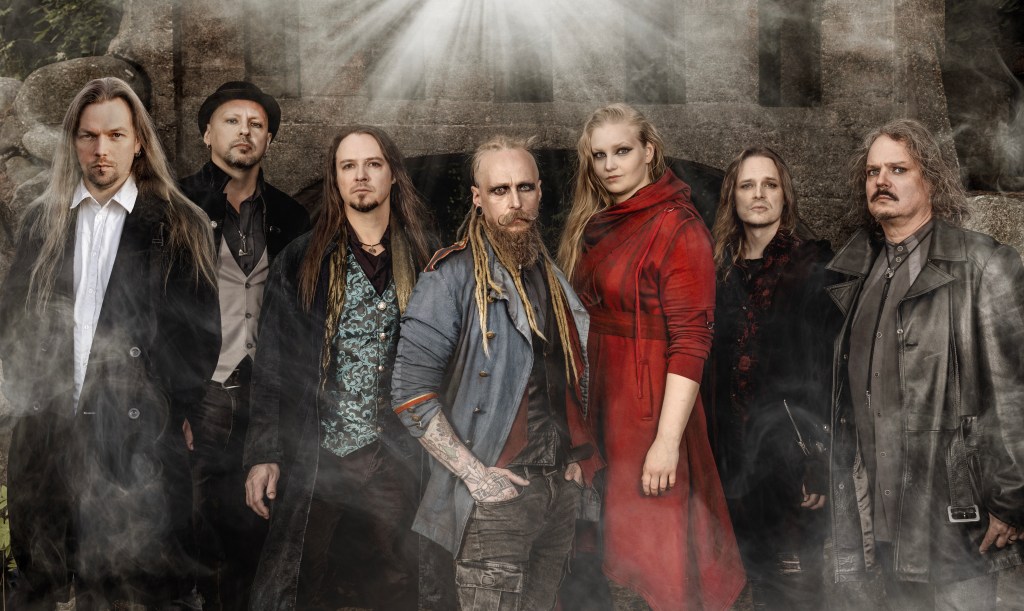
The Line-Up

  • Aso Brännkär — growl vocals
  • Jussi Matilainen — clean vocals
  • Harri Hytönen — guitar
  • Olli Hakala — bass
  • Ville Miinala — drums
  • Christian Pulkkinen — keyboards & orchestrations
  • Jarmo Puolakanaho — guitar, composition & production

What You’ll Hear (and When)

We’re deep into writing and pre-production. The album will be out next year.

Follow along at nebulaarcana.com and socials, the first embers are almost here.

Top Equipment for Home Metal Guitar Recording

In the not-so-distant past, capturing professional-quality metal guitar tones meant handling loud tube amps. It also required using oversized cabinets and fragile microphones. Often, there were complaints from neighbours. Modern digital modellers like the Line 6 Helix and the Kemper Profiler have changed that. High-end plugins from Neural DSP or STL Tones also contribute to this shift. Today, it’s entirely possible to record crushing, studio-ready metal guitar tracks from a modest home setup without sacrificing quality.

You could be recording melodic death metal rhythms, atmospheric blackened leads, or tight modern metal chugs. This guide walks through the entire process of crafting your guitar sound at a professional level. It covers everything from tone design to recording strategy, all without touching a single microphone.

The Setup: Gear and Signal Flow

Amp modellers like the Helix and Kemper are key to the home recording revolution. Plugin suites like Neural DSP’s Archetypes also play a significant role. These tools simulate amps, cabs, and pedals. They even simulate studio mic placements. This lets you go straight from your guitar to your DAW.

  • Helix doubles as an audio interface, offering a full pedalboard-to-amp-to-cab chain in one.
  • Kemper captures the tone of real amps via profiling. This allows you to record with any amp sound you can dream of.
  • (These are the amps I have, so I’m focusing on those two…)
  • Plugins like Neural DSP’s Fortin Suite or Archetype: Gojira let you build amp chains directly in your DAW.

The basic signal chain looks like this:

Guitar → Modeler/Interface or Audio Interface + Plugin → DAW

Always monitor your input levels—peaking between -10 dB and -6 dB is ideal. Avoid clipping at all costs. Use studio monitors or good headphones for accurate tone judgment.

The Foundation of Tone: Amp and Cab Choices

The amp model or profile forms the backbone of your tone. For metal, the usual suspects apply: 5150/6505, Mesa Dual Rectifier, ENGL, and Diezel. These are popular for a reason. They offer saturated distortion and focused mids. They also give the low-end punch that makes rhythm guitars slam.

But it’s the cabinet that truly defines the final tone. You’ll repeatedly hear this from pros. The speaker cab and mic model/IR account for 80% or more of your guitar tone. Use quality IRs of 4×12 cabinets loaded with Celestion V30s, often mic’d with an SM57 or MD421 equivalent.

If your modeler supports it, experiment with dual-cab setups (e.g., Helix dual cab block with different mic positions). Plugins like Neural DSP often include curated IRs designed to slot straight into a mix.

Boost and Gate: The Metal Guitarist’s Secret Weapons

Almost every modern metal rhythm tone includes a virtual overdrive pedal before the amp: usually a Tube Screamer-type boost. Set the drive low or off, level high, and tone around 6. This tightens the low end and adds clarity to palm mutes without adding unwanted gain.

A noise gate is essential too. Place it right at the start of the chain. Adjust threshold so it mutes unwanted hiss when you’re not playing but doesn’t choke sustained notes. If you’re using Helix or Neural plugins, try the Horizon Drive or Fortin Zuul gate emulations for high-performance results.

Rhythm Guitar Recording: Punch, Precision, and Power

Rhythm guitars need to sound massive, tight, and wide. Here’s how to achieve that:

Double-Tracking (Mandatory)

Record the same riff twice and pan one take hard left, the other hard right. This simple move transforms a mono tone into a wall of sound. The key is tight playing: each take should be nearly similar in timing and dynamics.

Quad-Tracking (Optional)

If you want an even thicker sound, record four takes (two per side). Use a slightly different tone on the second pair (e.g., different IR, different guitar volume) to prevent phasing.

Pro Tip: Never copy-paste one take to both channels. It only increases volume, not width.

EQ at the Source

Avoid excessive bass on the amp. Set bass around 4/10, mids around 6–7, and treble/presence to taste. Add a low-cut around 80 Hz and a gentle high-cut at 10–12 kHz to reduce rumble and fizz.

Lead Guitar Recording: Clarity, Character, and Width

Lead tones should cut through the mix and often gain from subtle effects.

  • Delay: A short delay (100–300 ms) with a low mix level adds space.
  • Reverb: Keep it subtle. Plate or room reverbs work well.
  • Mid Boost: Leads gain from more mids (700 Hz to 1.5 kHz) to stand above rhythm guitars.
  • Stereo Imaging: If you’re layering harmonized leads, pan them moderately apart (e.g., 30% L/R) or use stereo effects to create separation.

Effects During Recording: What to Print, What to Skip

Always print:

  • Noise gate
  • Boost/OD pedal

Optional:

  • Delay or reverb on leads (if essential to performance)

Avoid printing:

  • Compression (unless it’s part of a pedal effect)
  • Time-based effects on rhythm guitars
  • Modulation (unless used creatively for ambience)

Recording dry ensures flexibility during mixing. If in doubt, monitor with effects but record a dry signal.

DI and Reamping: Safety and Flexibility

Whenever possible, record a clean DI signal along with your processed tone. Both Helix and Kemper allow you to do this. If you’re using plugins, split your input in your DAW to record the raw signal.

This lets you:

  • Reamp later with a different tone
  • Add effects or correct tonal issues post-performance
  • Keep futureproofing in case you get new gear or plugins

Performance and Precision

Metal demands precision. Sloppy playing ruins even the best tones. Here are key tips:

  • Use fresh strings
  • Tune before every take (seriously)
  • Practice to a click track before recording
  • Don’t hesitate to punch in corrections

Take breaks often to avoid fatigue and keep your tone and timing sharp.

Final Tips for a Pro Sound

  • High-pass rhythm guitars around 80 Hz to avoid muddiness.
  • Low-pass around 10–12 kHz to tame fizz.
  • EQ cuts around 300–500 Hz if you hear mud or boxiness.
  • Double-check monitoring: use headphones and studio monitors to catch tonal flaws.
  • Save your presets and make notes about guitar settings so you can re-track later.

Conclusion

Recording metal guitars at home is no longer a compromise: it’s a creative advantage. With the right tools and techniques, you can produce tones that rival professional studios. Whether you’re a melodic death metal veteran, you might be exploring blackened atmospheres. Alternatively, you could be diving into technical death grooves. In any case, focus on thoughtful tone shaping. Guarantee a clean capture and deliver a confident performance.

Trust your ears. Play tight. And let your riffs speak for themselves.

Practice in Music and Meditation

A fellow goes to New York to attend a concert, but gets lost. 

He spots another fellow who’s carrying a violin case. 

“Sir, can you tell me how to get to Carnegie Hall?” 

The musician smiles and says, “Practice, practice, practice.”

If you’ve read my earlier posts, you already know I’m a believer in reinvention. I mentioned this in posts about saying goodbye to my former band. I also talked about it while starting a new band and the role of growth in both life and music. Reinvention not as a sudden shift, but as a slow, deliberate unfolding. Like songwriting. Like sitting in zazen meditation. Like playing guitar.

In a recent video, Brad Warner compared Zen practice to learning guitar. You can study theory, listen to great players, and understand it all intellectually. Still, unless you practice, none of it really becomes yours. That metaphor stuck with me, especially now.

Even though I’ve played guitar for over 35 years, I’ve never truly thought of it as a technical tool. It’s always been an extension of songwriting, a means of expressing emotion rather than showcasing skill. But this winter and spring, something changed. I started taking guitar lessons. It wasn’t to become a shredder. I wanted to push myself and my new band to a higher level. I want our music to evolve, and that means I have to evolve too.

Funny thing is, I practiced so much that I developed tendinitis in my left hand. So now I’m on a break. It’s frustrating, but also humbling. Because even in rest, there’s something to learn: about balance, moderation, and the limits of discipline.

That’s where the Zen metaphor comes full circle. Warner referenced a famous Zen story from Dōgen’sGenjōkōan“. It is about how air is ever-existing. Yet, unless you use a fan, you don’t feel it. Liberation, like air, is all around us. But without practice, without the fan, you don’t experience it. That’s how I feel about both music and meditation.

You don’t become a better musician by watching others. You become one by playing, by discovering your unique voice through repetition, mistakes, breakthroughs, and quiet progress.

And the same goes for Zen. You don’t “get” it through clever quotes or YouTube videos. You get it by sitting. Over and over again. Sometimes it’s clear, sometimes it’s muddy. But over time, it reveals something real.

In past posts, I’ve talked about embracing feedback. I’ve also discussed breaking free from genre expectations. Welcoming discomfort is part of creative growth. This is just another chapter in that same story. Whether it’s navigating the end of a beloved band or picking up new skills at 50, the lesson stays the same:

Practice is the path

So yeah, here’s to sitting. To playing. To not knowing. And to finding something true in the middle of it all, one breath, one note at a time.

Reflecting on Life Choices: My Journey to 50

It’s exactly one month until my 50th birthday. That’s a good age.

I know myself – my weaknesses and my strengths – better than ever before. I understand not only who I am now, but also all the choices from my past that have shaped me into the person I am today. I’ve managed to expand my comfort zone enormously, and I’m not afraid to push it even further.

I’m no longer that naïve, gullible people-pleaser whom even those I once considered my best friends would trample over. The 25-year-old me merely watched from the sidelines as whispers began behind my back and events unfolded – events whose meanings only became clear to me much later.

In fact, I still don’t fully understand why things happened the way they did. But that no longer matters.

That thirty-something version of myself consciously set all of that aside when the same people wanted to pick up where we had left off. And so I went along with it, only to finally come to terms with those thoughts recently.

Life goes on. The old band will never return, but the new band is charging ahead at full throttle.

I harbour no bitterness, nor do I blame anyone for anything. My past has made me exactly who I am. No one now tramples over me, and I make sure not to do the same to anyone else.

True strength, after all, does not mean a lack of empathy.

The End of Eternal Tears of Sorrow: A New Beginning

Eternal Tears of Sorrow has officially come to an end. But in reality, we had already been inactive for two years. We tried writing new songs, but our standards had risen so high that nothing truly excited us. And if the passion wasn’t there, forcing it would have felt wrong.

This time, the decision was mutual: no drama, no conflict, just the realisation that it was time to move on. And that’s a good thing. Knowing when to let go is just as important as knowing when to push ahead.

That wasn’t the case the first time.

In short, our first split in the early 2000s was incredibly difficult for me. It was not just hard in music, but also in life. When writing Chaotic Beauty in 1999, we were full of energy. But by the time it came out, something had changed. The enthusiasm faded. Discussions about ending the band began. Suddenly, I felt like an outsider in my own band. This was the first group where I truly felt I belonged. And then it was gone, and I couldn’t help it. Bad communication? Definitely. EToS was always horrible at communicating.

I wish I had just asked, “What the hell is happening here?” But I didn’t. I was a different person then: a people-pleaser, someone who didn’t know what I really wanted. And even before our fourth album had even been released, the band was practically no more.

When EToS returned in 2004, the band didn’t feel the same, after all the things that had happened. We, the old members of the band, were no longer a tight-knit group. We were just bandmates, colleagues. And that’s how it remained until the end.

But I have no regrets. Our second era brought two incredible decades of music, unforgettable experiences, and a deep appreciation for everything we built. We toured the world, wrote music we were truly proud of, and connected with so many people through our songs. EToS will always be a part of me, and I’m grateful for every moment.

Now, for the first time, I feel free to create something new, without the weight of the past. If there’s one lesson I’m taking into my next band, it’s this: communication matters. A band is like any relationship, without open conversations, things can fall apart very quickly. This time, I’m making sure we get it right.

So here I am, ready for what’s ahead. EToS was an unforgettable chapter. Now it’s time to write a new one with everything I’ve learned. I have a fresh perspective and a renewed sense of purpose. And I can’t wait to see where this journey takes me next.

Eternal Tears of Sorrow Announces Split: A Reflection

I’ll post this here first. The official announcement is coming soon, but let’s start with this.

In 2003, I found myself writing a very similar message. And now, two decades later, I’m doing it again.

Eternal Tears of Sorrow has split up.

We’ve been on hiatus for a year and a half now, and it has felt right for all of us. Unlike last time, though, the circumstances are very different—no drama, no hard feelings.

Of course, looking back, there are things we could have done differently and things we probably shouldn’t have skipped. But in the grand scheme of things, I’m very proud of what EToS achieved. We all are. Every choice we made led me to where I am today—and I’m happy with that.

Thank you to everyone who supported us over the years. It was an incredible ride.

Now, I’m excited for what’s next. Over the past year and a half, I’ve been fully immersed in a new melodic death metal project. If you’ve seen my previous posts, you might already know a bit about it—but there’s much more to come in the next few months. It’s a brand-new band with a fresh take on melodic death metal. And yes, there will be live shows—because, of course, there should be live shows.

P.S. Speaking of the future… While EToS never had a farewell show—and never will—there is something special coming next year, as I’ve already mentioned on Instagram. The Metallikausi museum exhibition will open in our second hometown, Oulu, and EToS will have its own section.

https://www.munoulu.fi/kulttuuri/metallimusiikin-muistot-avaavat-oulun-uuden-museo-ja-tiedekeskuksen-nayttelyt-ensi-vuonna/

https://pohjoispohjanmaanmuseo.fi/näyttely/metallikausi/

Behind the Scenes: Crafting the New Album in 2024

2024—especially the last quarter—has been a whirlwind of activity as my new band begins to take its definitive shape. Things feel vastly different now compared to the early days of Eternal Tears of Sorrow in the 90s. The changes aren’t just in terms of technology and the industry. They are also creative. I feel like a different songwriter these days.

Back then, I was young and brimming with raw ideas. Now, there’s a deeper sense of purpose and refinement in everything I do. There’s also freedom: I no longer need to consider whether a riff, melody, or idea fits within EToS’s established style. Thirty years of history gives any band a significant load to carry, both musically and otherwise. Leaving that behind has been liberating.

The forthcoming album has been a massive undertaking. Writing and composing each track has been intense but rewarding. About half of the songs are already written, and I have a clear vision for the rest. Each song is carefully crafted. It blends progressive, melancholic, and heavy elements. This captures the essence of what I’ve always wanted to create. While it’s been challenging at times, it’s also been exhilarating to explore new ideas and push boundaries.

The past two months, in particular, have been transformative. This is when the band truly started to take shape, with members slowly coming together to contribute their unique perspectives. It’s been hectic—sometimes exhausting—but the excitement of seeing everything come together outweighs the fatigue. The energy reminds me of the early days of EToS. It feels like the Chaotic Beauty era. This energy is now tempered by the maturity and vision that comes with decades of experience.

Looking toward the future, the first official press releases about the band should be ready before the summer of 2025. By then, most technicalities will be sorted. The groundwork will be laid for the album’s release. It is planned for the first half of 2026. This timeline allows us to perfect every detail. It ensures the music shows the best of what we can achieve, even though it feels far away.

This process has reminded me how much the music industry and songwriting have evolved since the 90s. Back then, it was all about live rehearsals and tape trading. Now, technology offers incredible tools but also presents new challenges, like maintaining authenticity in a digital age. Still, the core remains unchanged. It’s about creating music that resonates deeply. It’s about staying true to who you are.

As I write this, I’m filled with both anticipation and a sense of calm determination. The road ahead is still long, but the foundation is solid. The work we’re doing now will shape something truly meaningful, and I can’t wait to share it with the world.

So, merry Christmas, happy holidays, and a happy New Year to everyone!

Blending Dark Dystopian Undertones with Progressive Elements

As I dive into my latest musical project, I find myself reflecting on the path that’s led me here. The new music I’m creating can be described as diverse, progressive, melancholic melodic death metal, blending growling and clean vocals. In a way, it’s a return to the adventurous musical spirit Eternal Tears of Sorrow had in the 90s. I feel the same innocence and energy I had at that time.

The 90s were a defining decade for me, shaping my musical and literary influences. I delved into melodic death metal, progressive metal, and science fiction—genres and themes that have stayed with me ever since. I discovered artists who would profoundly impact my creative direction. These included Devin Townsend and Anneke van Giersbergen with The Gathering. I also explored dystopian literature like 1984 and Fahrenheit 451. These influences have always been a part of me, even if they couldn’t fully manifest within EToS.

EToS was a collective effort, with our music being a blend of everyone’s ideas and preferences. This collective approach was rewarding but also limiting. Now, with the band on hiatus, I’ve found the freedom to explore new sonic territories that show my true self.

Books (and TV shows) like Good Omens and Station Eleven have also deeply influenced this new chapter. Good Omens taught me about the melancholic balance between light and dark. This contrast is something I’ve always explored in my music. Station Eleven resonated with its message that “survival is insufficient,“. It emphasised the importance of art and beauty, especially in dire times. These themes are guiding my current work, which seeks to blend progressive elements with darker, dystopian undertones.

This project marks my first thematic album, and it’s a thrilling challenge. It’s about rediscovering that sense of innocence and curiosity in songwriting. It’s about exploring uncharted creative spaces. It’s about weaving together the diverse influences that have shaped me. There are echoes of my past work. This new venture is about pushing boundaries. It’s about seeing where this renewed creative freedom takes me.

I’m eager to share more as this journey unfolds. The path ahead is filled with unknowns, but that’s what makes it so exciting.

Creative Fusion: The Symbiotic Relationship Between Music and Narrative

As summer gives way to autumn, I’ve found myself in a space where creativity is taking me in unexpected directions. It’s both exhilarating and mysterious, like catching glimpses of something just out of sight. Recently, this sense of intrigue has emerged in two distinct but strangely interconnected ways—through a story that’s been forming in my mind and the music I’ve been composing.

I’m not ready to reveal the details just yet, but there’s something about these new songs that feels closely linked to the story I’m beginning to explore. It’s as if the music and the narrative are communicating with each other, sharing secrets that I’m only now starting to grasp. The story itself is one of those ideas that seems to emerge from nowhere, almost demanding to be told. It’s a tale filled with mystery and wonder, where ordinary lives are touched by the extraordinary, and every moment seems to hold a hidden meaning.

What’s both fascinating and frustrating is how these creative threads—music and story—are starting to weave together, each subtly influencing the other. The process is moving at an irritatingly slow pace, even though everything is going according to plan. The songs I’m working on have taken on new depth, with melodies and themes that show the emotions and ideas within the story. Nonetheless, I’m still working on everything alone, focusing on writing the majority of the songs—at least the instrumental versions—before bringing anyone else into the project.

This journey is challenging, but it’s also incredibly rewarding. There’s a synergy here that’s pushing me to explore new creative territories, to dig deeper into both the music and the story, uncovering layers I hadn’t anticipated. I’m genuinely excited about where this creative fusion will take me, even if the road ahead is long and winding.

I hope to share more detailed news by next spring, the spring of 2025. By then, I aim to have a clearer picture of how these elements fit together and how this story, these songs, and this sense of wonder have all converged into something that feels almost like destiny. There’s so much ahead of me, so much to explore, and although the process is slow, I can’t help but feel a surge of excitement for what’s to come.

For now, I’ll keep the details under wraps. There’s still much to explore and understand. But I’m thrilled about the journey and where this creative fusion will lead. As I continue to write and compose, I’m finding that the most intriguing stories are often the ones that reveal themselves slowly, in their own time.

So, stay tuned. There’s more to come, and when the time is right, I’ll share more about this journey—how a story, a few songs, and a sense of wonder have all come together to create something that feels, in its own way, like destiny.

Melancholic Melodies, Melancholic Themes

Have you ever had an idea strike you out of nowhere, like a lightning bolt during a quiet coffee break? Earlier this week, that’s exactly what happened to me. As I sipped my morning coffee during a work day, the overarching theme for my forthcoming album suddenly crystallized in my mind.

For the past year, I’ve been exploring various themes and concepts. From apocalyptic visions to intimate fears and sci-fi epics, I’ve tried them all. Yet, each idea felt incomplete, like a melody without with a slightly wrong chord progression. Writing new songs has been a cakewalk, but the big question remained: what do I truly want to say with this album?

I can’t divulge too much about the theme yet, but I can reveal that it perfectly complements the melancholic melodies I’ve been crafting. It’s dystopian, not in a hard sci-fi way, but through a psychological lens that examines a dystopian situation.

This creative exploration has taught me that creativity isn’t always a straight path. Sometimes, it’s a winding road filled with echoes of what might be. As I prepare to write more music this weekend, I’m also ready to immerse myself in the sounds that have always fueled my passion.

What themes resonate with you in music? How do you connect with the melodies and stories woven into albums?

Or: when listening to an album, do you care about the theme and the lyrics at all?

Demo Song: The Forest of Songs

I released a new song on SoundCloud. This isn’t anywhere near how my new songs sound (new songs meaning those for my forthcoming album), so I decided to release this as a demo version.

This is a song from last year. It’s quite different, as I just tried some of the new virtual instruments I had just bought. The end result is quite cool and hypnotic.

Tulevasta levystä suomeksikin…

Suomeksi kirjoittaminen on loppujen lopuksi yllättävän hankalaa monestakin syystä. Ensinnäkin on helpompaa kirjoittaa koko bändin puolesta, yhtenä osana sitä, kuin omasta itsestäni kirjoittaminen. Toisaalta en ole koskaan halunnut olla esillä, en ainakaan yksin. Introverttinä kaikenlainen “ylimääräinen” huomio tuntuu ärsyttävältä. Mutta kirjoitan silti, koska niin joudun joka tapauksessa tulevaisuudessakin tekemään.

Eternal Tears of Sorrow on ollut tauolla noin vuoden, ja yllättävää kyllä, olen tyytyväinen tilanteeseen. Ensimmäistä kertaa voin tehdä asioita juuri niin kuin haluan. Kaikki menneisyyden taakat ovat poissa, ja nyt minulla on mahdollisuus keskittyä uuteen musiikkiin, joka kuulostaa aidosti minulta. Saan keskittyä olennaiseen ja ainoaan minulle todella tärkeään asiaan: uusien biisien tekemiseen.

Tänä kesänä, nyt kun kesälomani on kääntymässä kohti loppua, olen tuntenut tekeväni osittain samoin kuin kauan kauan sitten teini-ikäisenä: olen kokeillut kaikenlaista uutta ja saanut muodostettua mielenkiintoisia ääniä, sointuja, sointukulkuja, riffejä, biisejä. Tietynlainen uuden musiikin ihmettely on palannut voimakkaammin kuin vuosikausiin. Sitä voisi kutsua löytöretkeilyksi musiikkiin.

Joten menen asiaan: levyn tekeminen etenee etenee. Yksi biisi on jo melkein valmis (on muuten ehkä paras biisi mitä olen koskaan tehnyt…), ja muihin on jo teemoja, riffejä ja ideoita. Uusia ideoita syntyy viikoittain, joten mahdolliset biisit voivat vielä vaihtua.

Tietyt asiat säilyvät. Menen edelleen melodia edellä ja sekoitan mukaan raskautta, rankkuutta, synkkyyttä, monipuolisuutta, vaihtelevuutta ja dynamiikkaa. Tämä on mielestäni melodisen death metallin ydin. Mukaan saattaa tulla myös sipaus progressiivisuutta: jos biisi vaatii 20 minuutin pituuden, olkoon niin, ja toinen biisi voi olla vain pariminuuttinen. Tai ehkä folkia, post-metallia tai jotain ihan muuta? Kaikki on mahdollista.

Levy tulee ulos sitten, kun kaikki on valmista, ehkä kolmen vuoden päästä, ehkä aiemmin tai myöhemmin. Tämä antaa tilaa luovuudelle ja mahdollisuuden hioa jokainen kappale täydelliseksi. En kiirehdi, sillä haluan varmistaa, että jokainen sävel ja sanoitus on juuri sitä, mitä olen aina halunnut luoda. Kaikki menee suunnitelmieni mukaisesti.

Tavoitteeni on tehdä hyvä ja monipuolinen levy. Haluan tutkia, miten 2020-luvun biisinkirjoitustyylini eroaa aiemmista vuosikymmenistä. Vaikka EToSilla oli oma tunnistettava tyylinsä, uusi musiikkini tulee sisältämään uusia ja mielenkiintoisia elementtejä. Toki bändiin / projektiin tulee muitakin jäseniä mukaan, kun on oikea aika (eli kun biisit alkavat olla valmiina), ja he tuovat musiikkiin oman lisänsä.

Matka on vasta alussa, mutta jatkuu hitaasti ja varmasti. Pysykää linjoilla, sillä tulen edelleen kirjoittamaan edistymisestäni sekä suomeksi että englanniksi. Hyvää loppukesää!

Doctor Who Series 14: New Doctor Ncuti Gatwa and Exciting Storylines

Doctor Who‘s brand new series has ended, and it’s left fans buzzing. Some call it season as it was sort of a reboot, but let’s be real, most of us call it series 14. This series was a game-changer, introducing Ncuti Gatwa as the 15th Doctor and marking the triumphant return of Russell T Davies since series 4. So, we’ve got something old (the Doctor), something new (the new Doctor), something borrowed (the villain; from the 4th Doctor stories), and something blue (the TARDIS, obviously).

In the world of Doctor Who, fans are split between Team Russell T Davies (series 1-4) and Team Steven Moffat (series 5-10). Each has their unique flair: Davies is a master at character creation, while Moffat spins intricate, mind-bending tales. Personally, I’m a fan of both. My top episodes were penned by Moffat but produced under Davies: “Blink,” “The Empty Child,” “The Doctor Dances,” “Silence in the Library,” and “Forest of the Dead.”

River Song fans, it’s time to say it: Spoilers!

How does series 14 stack up against the previous 13 “Nu-Who” series?

Surprisingly, it’s a hit. Sure, there were a couple of duds: “Space Babies” was cringe-worthy, and “Dot and Bubble” was a snooze-fest. But then, we had three absolute gems: “73 Yards” and the two-part finale. The rest of the episodes were decent, with “The Devil’s Chord” having its moments.

Getting back to Moffat for a moment: he returned to write an episode this series, titled “Boom.” It was good but not his finest work. It felt like a high-quality filler episode, missing that extra depth to make it a classic. The idea of the Doctor sitting on a landmine for the most of the episode is intriguing in theory, but in practice, it felt a bit flat.

The 14th series mainly focused on the new Doctor and his companion, Ruby Sunday, and her mysterious backstory. So, let’s dive into those.

First up, the Doctor. Ncuti Gatwa was born to play the Doctor. His portrayal is electrifying, brimming with energy, emotions, and a dash of unpredictability. He’s like a cocktail of the 10th and 11th Doctors, with his unique twist. He’s a child at heart and a 2000-year-old Time Lord rolled into one.

Now, let’s talk about Ruby Sunday. The central mystery was her unknown mother. The Doctor saw her but couldn’t see her face. Ruby also glimpses her mother but with the same result. Finally, in the two-part finale, a DNA test reveals the truth, thanks to UNIT‘s superior tech, making Davina McCall’s team look like amateurs (“The Church on Ruby Road”).

But here’s the kicker: in “The Church on Ruby Road,” Davina’s team couldn’t trace Ruby’s lineage, suggesting she had no earthly relatives, hinting she might be an alien. Yet, she turns out to be the daughter of two ordinary humans. Plot hole alert! This contradiction is a bit like Rey’s parentage reveal in Star Wars—initially mysterious, then mundanely human. A bit boring…

Could this plot hole have been fixed? Yes. Ruby could’ve been from the distant past or future, making DNA matches impossible. Or, she could’ve been a paradox, with no DNA matches because her mother was, well, herself. Sometimes, keeping secrets is more thrilling, just like the Doctor’s true name.

Regardless, Ruby Sunday shines as a companion. Millie Gibson delivers a stellar performance, especially in “73 Yards,” a Doctor-Lite episode that leaves just enough mystery to keep us hooked. Some despise ambiguous plots, but I adore them.

Overall, series 14 was a delightful surprise. A mix of bad, average, and fantastic episodes, but the overall vibe was positive.

Now, I’m eagerly awaiting the Christmas 2024 special “Joy to the World,” penned by Steven Moffat and starring Bridgerton’s Nicola Coughlan as the companion. It promises to be a festive treat. Only six months to go!

Embrace Diverse Tastes in Music

Recently, I read an interview with former Megadeth bassist David Ellefson, where he discussed how, in the 90s, metal fans couldn’t admit to liking Nirvana. It was true then, and to some extent, it remains true today. Many metal enthusiasts either don’t want to listen to anything outside of metal or at least don’t want to admit it. This doesn’t apply to everyone, but it does to many.

The same goes for ABBA. Timo Tolkki from Stratovarius mentioned that in the 90s, he couldn’t tell anyone he liked ABBA. In the 70s, many dismissed ABBA as frivolous pop music. Indeed, the band played pop, but in hindsight, ABBA’s melodies were, and still are, in a league of their own compared to many other 70s pop melodies.

This attitude extends to metal musicians as well. Many bands playing old-school death metal in the 2020s wouldn’t dream of incorporating anything other than traditional death metal into their music. Fortunately, some think outside the box, as the English saying goes.

Then again… Who am I to dictate the right or wrong way to proceed? AC/DC has essentially been making the same album over and over for over fifty years, and few people wonder, “Why don’t they try something new?” AC/DC is AC/DC, and that’s how it should be.

You know, there are reasons for everything. If a band’s primary job is being a band, and each member has a family to support and a mortgage to pay, it’s understandable that they wouldn’t want to change their style drastically. They have to make a new album every three years and then go on tour to earn money for food and rent. It’s a job like any other, though perhaps different from 95% of other jobs.

This is one of the main reasons I’ve never wanted to be a full-time musician.

Firstly, what on earth would I do in my free time if I made music for at least eight hours a day?

Secondly, I currently value the freedom of making music more than ever. I can calmly think about new songs, experiment, and fail many times before I have an album’s worth of material. I have a loose schedule (I hope to have about half the songs for the upcoming album ready by the end of this year, or at least four songs), but schedules can change because I’m only accountable to myself.

And I can also say: the album will feature a variety of music. Mostly metal, and heavy and dark at that, but also influences from bands like Cardiacs, Spock’s Beard, Alcest, Porcupine Tree, Panic Room, and Tinyhawk & Bizarro. There will be orchestral, symphonic, and dark melodic death metal. It will be melancholic, but not gothic. Let others who prefer that genre create gothic metal.

Or, actually, who knows what the album will ultimately sound like? The final outcome could be anything. I’ve only written songs for half a year or so… And I have one song that will definitely be an integral part of the album. For the rest of the songs, I have some ideas and thoughts, but they can change.

I do know that the last EToS album was released over ten years ago. Which in the world of music is forever. And this isn’t even going to an EToS album but something entirely new, as these songs aren’t going through the usual EToS songwriting process. Far from that. It’s going to be something completely different. Or, at least, different.

So…. Getting back to the thought I started the post with. Think of a hundred years from now. Few of us will still be alive then. Will people care about what music you said you listened to? Probably not. Listen to what you want. Be yourself. Be creative in your own way, because nobody else will. Don’t hide your light under a bushel.

A question for you:

Is there a band you just can’t admit to liking?

Progressive Melancholy: Crafting Dynamic and Versatile Melodic Death Metal

The world is in a dark place these days. Democracy seems to be deteriorating across the West, and many people are yearning for strong leaders, which feels strange to me. Over the past century, mankind has found more and more ways to destroy itself, casting a shadow over our future. In times like these, music becomes essential. It has the power to wake people up and console them in their fears.

Given this backdrop, my music must reflect the melancholy and scariness of the current times. Metal, in particular, needs to evoke a sense of fear and unease. This is how Black Sabbath came up with the idea of heavy metal. According to Wikipedia, “A cinema across the street from the band’s rehearsal room was showing the 1963 Italian horror film Black Sabbath […]. While watching people line up to see the film, Butler noted that it was strange that people spend so much money to see scary movies.” So, scariness equals metal. Melancholy also equals metal, in my opinion. Therefore, my music must be heavy, dark, and melancholic, yet diverse and dynamic.

About my new band… My songwriting process has been slow, as my primary job consumes most of my weekdays. However, I’m excited to share that I’ve managed to write what I believe is the best song of my life. It’s a bit unusual, as I experimented with my 7-string guitar, tuning it to dropped G instead of my usual one-step down to A. Despite this, the song doesn’t sound overly heavy. At times it does, but it also has moments that sound almost happy.

In general, everything seems to be progressing according to the plan I made last winter. My goal is to write more songs and create demos. Once I have at least 40 to 50 minutes of music, I’ll start thinking about the lyrics. After that, I may write more music. Eventually, the band will need more members to take it to the next level.

A few weeks ago, I read something Kerry King said about his solo project. He mentioned that you get lazy in a long-established band because you only need to focus on your own role. In your own band, you have to take responsibility for everything, which makes things slower and harder. He’s absolutely right; this is not as easy as it is with an established band.

But it’s worth it. I’ve already got many ideas that I could never have executed before. A theme album or a concept album? We shall see. Ideas influenced by Porcupine Tree, Tool, or even Spock’s Beard? I have some of those too, although the backbone of these songs remains melodic death metal. As they say, a leopard cannot change its spots. In the ’90s, with the other EToS guys, I learned what’s important in metal music: heaviness, melodies, versatility, and dynamics. Those elements remain.

Even though I think Slayer‘s Reign in Blood is one of the best metal albums ever, I would never write an album like that. Shadows need light for contrast, and heaviness needs melodies. This is what melodic death metal is: a genre but also a philosophy. It’s almost as if melodic death metal requires bands to surprise their listeners; you should never know what’s coming next when listening to a brand-new album. That’s my perspective, anyway.

So, ideally, this album should have a loose theme, but each song should have its own character and story. Perhaps something like Black Mirror meets The Twilight Zone meets The Outer Limits meets Tales from the Crypt. However, this depends on how the songs turn out. My initial wish was for these songs to be heavier, darker, and more progressive than anything I’ve done before. But I don’t think that’s going to happen. Instead, there are some new elements, but the melodies and melancholy are still there.

I know there will be less gothic metal and more progressive ideas. I always questioned EToS being labelled as gothic metal, even though it is partly true, as we were influenced by Paradise Lost when we started. I mentioned “melancholy” earlier, and that will remain. However, “melancholic” does not equal “gothic” to me, even though they do somewhat overlap. For me, melancholy is the opposite of happiness, so melancholic music is definitely not happy music. And I couldn’t write anything happy anyway.

Why melancholic? As I mentioned at the beginning of this post, the world isn’t quite a happy place right now. Music is a perfect way to convey these fears.

So, heavy, dark, and melancholic it is, and always will be.

Artistic Growth: Embracing Feedback and Originality

  1. Learn Something New All The Time: Curiosity, Passion, Discipline, Creativity

Every day, or at least every week, try to learn something new. Listen to new music, especially something entirely different from your own style or preferred genres. Perhaps you need to delve deeper into music theory: chords, chord progressions, scales, rhythm, melodies, harmonies—whatever it may be.

It’s essential to learn how to write good songs and continuously improve with each new composition. There are no shortcuts; you learn by doing.

No matter your daily activities, make learning a habit. Spending just 15 minutes a day on learning can make a significant difference over time.

  1. Opinions from Other People: Feedback, Constructive Criticism, Listen to and Learn from Others

No man is an island,” John Donne wrote, and it’s true. Even if you think you’re writing just for yourself, you still smile when others enjoy your music. They may have critiques, but remember, that’s just their opinion. Try to see your work from their perspective for a moment.

  1. Learn to Play Your Instruments Well: Practice, Practice, Practice. Learn. Practice More

Master your instrument, whatever it is. Practice singing or playing regularly. Experiment with other instruments or try playing your guitar upside down with your “wrong” hands.

If your DAW is your instrument, treat it as such. It’s often one of the most critical tools you need to master. Use it, experiment, and continuously learn new techniques.

  1. Do Many Good Live Shows

Play as many shows as you can. Analyse your performances and learn from your mistakes. Then play more shows.

If live performances aren’t for you, find other ways to promote your music effectively.

  1. Make Great Recordings

By now, you should be well-prepared. Secure a great record deal, go to a reputable studio, and record your songs meticulously. Mix and master them with care.

If you choose to mix and master your recordings yourself, ensure you have the necessary skills (see ).

  1. Be Original

This is the hardest yet most crucial task. Be original. Be yourself. Be unique, different, creative, and innovative. Be a leader, a trendsetter, a game changer, and ultimately, a legend.

  1. Establish Good Routines

Set up your environment to facilitate creativity. Ensure you can start creating immediately without spending 30 minutes preparing your gear. This way, you won’t lose the magical moment of inspiration.

  1. Don’t Take It Too Seriously

Music, it’s just entertainment, folks!” (as Devin Townsend says). “Art is too important to be taken seriously” (as Oscar Wilde notes).

For perspective: in 100 years, no one will remember you personally. However, people may still listen to and remember your music.

  1. Critics Are Both Right and Wrong

Critics are simply doing their job: listening to music and sharing their feelings about it. Honest reviews benefit everyone, so consider their feedback.

However, a review is just one person’s opinion. A bad review isn’t the end of the world. Some people won’t connect with your music, and that’s okay. Learn from feedback and move forward.

  1. A Practical Piece of Advice: Back Up Everything

This might be the most underrated yet crucial advice. Always back up your work. Losing a great song because of a computer crash can be devastating. Ensure you have backups to avoid such losses.

Eternal Tears of Sorrow: 30th Anniversary

It’s been some time since I last wrote about Eternal Tears of Sorrow, whether individually or on behalf of the entire band. Our seeming inactivity over the past decade plays a part in this silence.

Today, I bring you a mix of news.

First, the cheery part: “Good news, everyone!” (Those who have watched Futurama know that unfortunately, this phrase is often followed by bad news.)

This month marks three decades since the inception of EToS—certainly a cause for celebration! Or it is actually 32 years if you count from the early days of our forerunner, Andromeda, which began its journey in early 1992.

However, this is tempered by the less cheerful revelation that we have been on hiatus for about a year—a decision that we hadn’t publicly disclosed until now. Hence, there are no official celebrations for this milestone.

Each band member has their reasons for this break. Personally, I feel we might have reached our creative zenith; continuing as before might merely mean repeating ourselves in every conceivable way—songwriting, performing, recording, and the like.

Despite our efforts over the past few years to produce new songs, perhaps aiming for a single or an EP, these did not yield the hoped-for results. The new material seemed either too derivative of our past work or lacked the necessary collective enthusiasm, suggesting we might have exhausted our potential as EToS.

Yet, this period was far from fruitless for me. I’ve significantly honed my songwriting skills and learned to inject new life into our music. These lessons are invaluable as I embark on new projects. Each of us is now exploring different musical avenues through various bands and projects.

As for myself, I’ve been developing a new project since the onset of the pandemic, envisaging something that might echo EToS but with a heavier, more progressive, or even experimental twist. The project will certainly have stuff that hasn’t been possible with EToS, or stuff that I couldn’t even imagine during our active years. So, I’m filled with fresh ideas and enthusiasm for this new direction, exploring where these paths might lead. And this may not be the only project on the horizon for me—I have numerous new ideas that could take many different forms. Only time will tell.

So, I hope to release information of this band/project – or even more projects or bands – next year, as I turn 50 years then.

As to when the EToS hiatus might end, that remains uncertain. We will resume when we all feel the moment is right, perhaps with a reimagined sound and approach to ensure everything feels fresh and invigorating.

In the meantime, I invite our fans to stay connected through our official social media channels on Facebook and Instagram.

Thank you for your steadfast support over these three decades. It has been a profound honour to share this journey with you. Expect us when you see us.

Best regards,
Jarmo Puolakanaho & Eternal Tears of Sorrow

EToS: 30-vuotissynttärit!

Siitä onkin jo aikaa, kun viimeksi kirjoitin Eternal Tears of Sorrow‘sta, joko omasta tai koko bändin puolesta. Ulospäin on varmasti näyttänyt siltä, että olemme olleet hiljaa koko tämän vuosikymmenen ajan. 

Tänään on viimein oikea aika kertoa bändin asioista.

Ensin iloinen osa: ”Hyviä uutisia, kaikki!” (Futurama-fanit tietävät, että tätä lausetta seuraa poikkeuksetta huonoja uutisia). 

Tässä kuussa tulee kuluneeksi 30 vuotta bändimme perustamisesta – se on varmasti syy juhlaan! Tai 32 vuotta, jos mukaan lasketaan EToSin ensimmäisen esiasteen, Andromedan, alku alkuvuonna 1992. 

Nyt ne huonot uutiset. 

Olemme olleet tauolla noin vuoden. Emme ole kertoneet tästä julkisesti ennen tätä päivää. Siksikin tätä virstanpylvästä ei juhlita virallisesti. Kaikilla on muuta tekemistä.

Jokaisella bändin jäsenellä on omat syynsä tähän taukoon. Omasta puolestani tuntuu, että olemme ehkä saavuttaneet kaiken mahdollisen. Jatkaminen olisi vain vanhojen juttujen toistamista musiikillisesti ja oikeastaan kaikilla muillakin tavoin. Huomasin tämän itse ehkä myöhemmin kuin muut, vasta viime vuonna, ja lopullisesti vasta tämän tauon aikana.

Mutta me toki yritimme. Yritimme kirjoittaa edes sen verran uutta tuoretta materiaalia, että olisimme saaneet julkaistua edes sinkun tai EP:n. Mutta epäonnistuimme. Uudet biisit tuntuivat joko vanhan toistamiselta tai väkisin väännetyltä. Ehkä voidaan siis sanoa, että intohimo ja inspiraatio olivat kadonneet.

Silti tämä ajanjakso ei ollut minulle suinkaan turha. Olen oppinut paljon musiikista ja biisinkirjoittamisesta. Nämä opit ovat korvaamattomia nyt, kun olen (bändin muiden jäsenten tavoin) suunnannut kohti uusia bändejä ja projekteja. 

Omalta osaltani olen kehittänyt uutta projektia pandemian puhkeamisesta lähtien. Se saattaa kuulostaa osin vanhalta tutulta EToSilta (mitenkäs seepra pääsisi raidoistaan?), mutta jossa olisi kuitenkin raskaampi, progressiivisempi tai jopa kokeellinen vivahde. Mukana on taatusti paljon sellaista, mikä ei ollut mahdollista EToSin aikana, tai ei edes tullut silloin mieleenkään…

Kovalevyilläni on jo nyt aikamoinen määrä tuoreita ideoita. Kun vain olisi vieläkin enemmän aikaa tehdä niistä jotain… Eikä tämä ole ainoa miettimäni projekti/bändi. Mielessä on orastavia ajatuksia muistakin mielenkiintoisista jutuista. Aika näyttää. Toivottavasti saan julkaistua ensi vuonna edes uutisia tuosta bändistä, tai jopa useammasta. Ensi vuonna nimittäin täytän 50 kokonaista vuotta (huhhei…) ja siihen juhlavuoteen sopisi paremmat uutiset kuin nämä.

Takaisin bändiimme. EToSin tauko kestää niin kauan kuin se kestää. Jatkamme, kun kaikkien mielestä aika on oikea. Ehkäpä tuore soundi ja uusi lähestymistapa kainalossa. Ainakin puhtaalta pöydältä pitää aloittaa, siitä olen varma.

Sillä välin voitte seurata bändin ja sen jäsenten kuulumisia Facebookissa ja Instagramissa (etosofficial kummassakin).

Kiitos tuestanne näiden kolmen vuosikymmenen aikana. Koko bändille on ollut suuri kunnia jakaa tämä matka kanssanne. 

“Expect us when you see us”, sanoisi vaka vanha harmaaparta Gandalf tässä tilanteessa.

Terveisin,

Jarmo Puolakanaho & Eternal Tears of Sorrow

Echoes of the Unexpected: Finding Depth in Musical Peculiarities and New Beginnings

Do you recall the last time a song struck you so profoundly that you found yourself compelled to listen to it repeatedly?

I certainly remember my most recent experience. It occurred last year when I stumbled upon ‘Tarred and Feathered‘ by Cardiacs, which is one of the most peculiar songs I’ve ever encountered. Yet, its peculiarity is merely one aspect of the song’s allure. Ultimately, I’m unsure why it resonated with me so deeply. Perhaps it was simply the perfect song for that moment.

Moreover, the song’s eccentric music video heightened my sense of confusion and delight. Discovering that Tim Smith, the band’s leading figure, had passed away a few years earlier added a layer of sadness, yet it also strengthened my emotional connection to the band.

What an extraordinary way to discover a band you’ve either never heard of or perhaps passively ignored until now.

This raises a question: does a wonderful song need to belong to a genre you typically enjoy? Or can it captivate you despite being completely outside your usual preferences?

The answer, I believe, is unequivocal. A good song transcends genre boundaries. Ideally, discovering a new band can introduce you to a new realm of music, akin to uncovering a previously unknown genre. This reminds me of J.R.R. Tolkien‘s experience when he began learning Finnish and encountered Kalevala, the Finnish national epic. He described it as akin to uncorking a wine bottle of an entirely new variety and flavour.

It’s often said that one’s musical taste tends to stagnate before reaching 30. Finding entirely new bands that resonate with you becomes less likely, though not impossible. Hence, one should never cease exploring new music. Opting to bask in nostalgia is perfectly acceptable too. Who am I to judge?

Nonetheless, the thrill of discovering something new can rejuvenate your spirit. Then again, for some, reliving the music of their youth brings back a sense of youthfulness. It’s a matter of perspective.

From a songwriter’s standpoint, my aspiration is that at least one of my compositions has profoundly touched a listener in some way. This, I believe, is the pinnacle of achievement for both songwriters and musicians.

A few observations…

In an interview, Sting once remarked, “If a new song fails to capture my interest within the first eight bars, I’ll skip it.” While this approach may seem stringent, I understand his perspective. First impressions are crucial, especially in an era where attention spans are challenged by 15-second TikTok videos.

Another perspective comes from Warren Huart, a British producer based in the USA, who opines that music nowadays lacks excitement. He suggests that bands should infuse their songs with originality and unexpected elements. According to him, while 90% of a song should align with the genre’s conventions, incorporating 5% to 10% of something completely unique can make a track stand out. This could be an unusual instrument, chord, melody, rhythm, lyric, vocal style, production technique, or any other element of surprise.

In my view, this embodies the essence of progressive music, which I see not just as a genre but as a mindset focused on innovation rather than taking the easiest path.

Merging these insights with my understanding of melodic death metal—always striving for diversity and drawing inspiration from various sources—provides a glimpse into my approach for the upcoming album. It won’t be straightforward or quick, but it will materialize.

Above all, my deepest hope is that the new songs will profoundly impact at least one listener. Achieving this would be immensely gratifying.

Stay tuned for further updates.

Time Passes by So Quickly…

As my 49th birthday looms on the horizon next month, I find myself reflecting deeply on the journey so far.

It’s been a rollercoaster of discovery. Looking back at the turn of the millennium, I realize how much I’ve learned. The band was my everything, a crucial part of my identity, but I’ve come to understand that such heavy reliance wasn’t the healthiest in the long run.

Back in ’99, being in a band felt entirely different. The internet was just a baby, and social media was nowhere on the horizon. We only had the Web, no Instagram, Facebook, TikTok, YouTube – not even Napster or Myspace for sharing our music. Bands weren’t tied down by the need for constant online promotion. Today, however, crafting an engaging online presence is crucial, a challenging shift for someone from the old school like me. But, every day is a chance to learn and adapt.

One reflection that’s particularly resonated with me was seeing our album ‘Chaotic Beauty‘ described as ‘Progressive Death Metal’ – a rare but insightful categorisation. This acknowledgment of the complexity and depth of our work has significantly influenced my recent musical endeavors.

Now, I’m quietly working on something new, a project that’s been simmering since the start of this decade. It pays homage to familiar territories while venturing into new realms, blending the old with the new. This venture feels like coming full circle, marrying past lessons with future opportunities. 🌌

Life, I’ve realized, is about continuous learning and adaptation. From the seismic shifts of the early noughties to navigating today’s digital landscape, every step has been preparation for this moment. As I stand ready to embark on this new chapter, I’m filled with excitement and a touch of nerves for the adventures that lie ahead.

I’m finally ready for this next journey. Allons-y, then! And stay tuned for more details in the near future.

My Instagram Account

In my Instagram journey (@goashem_music), I’ve embarked on a special series where I dive into the stories behind some of the most impactful songs I’ve had the pleasure of crafting for Eternal Tears of Sorrow, or at least those tracks where I’ve played a significant role. I kicked off this series with “Sinister Rain,” a track I personally consider among my finest creations. Following that, I explored “Autumn’s Grief,” a song that marks the exploration into the gothic dimensions of EToS’s sound.

For those intrigued by the creative process behind music, my Instagram page offers a glimpse into these tales.

In other news, I’m currently dedicating time to composing new music, aiming to enrich our discussions with fresh content beyond the classics I’ve previously discussed.

My Journey with the Kemper Profiler Player

Last Friday, my musical toolkit expanded with the arrival of the Kemper Profiler Player, a step that’s set to significantly influence my path toward crafting new, heavier, and more progressive melodic death metal albums. This addition isn’t just about acquiring another piece of equipment; it’s about embracing a tool that promises to deepen the sonic textures and complexities of my music, particularly when used alongside my Line 6 Helix.

The Kemper offers a fresh perspective, not by replacing my Helix but by augmenting it, providing a rich tapestry of tones that complement the Helix’s capabilities. Together, they form a powerful duo that supports my vision of pushing boundaries in the melodic death metal genre. The compact nature of the Kemper is particularly appealing, granting me the flexibility to create and record music in a variety of settings, from the comfort of my home studio to the most remote locations where inspiration strikes, powered by my small solar station or the trusty, battery-operated Boss GT-1 pedal when needed.

While the Boss GT-1 has its place in my rig, especially in situations where power is scarce, its sonic output simply can’t compare to the depth and authenticity that the Kemper brings to the table. The Kemper’s ability to accurately capture and replicate the essence of real amplifiers is nothing short of revolutionary for my music, providing a foundation upon which I can build more complex, rich, and aggressive tones that are essential for the new directions I’m exploring in my albums.

Reflecting on my initial experiences with the Kemper Profiler Player, I’m filled with optimism. This piece of gear exceeds my expectations by offering not just portability and quality but also by being a pivotal element in my journey towards creating more intricate and heavy music. As I delve deeper into integrating the Kemper with the Helix, my excitement for the sonic possibilities they will unlock for my upcoming projects continues to grow. This is not just another step in my musical journey; it’s a leap towards realizing the soundscapes I’ve always imagined for my future albums.

Nebula Arcana

In the year 2047, humanity gazed upward to witness a celestial enigma, the Nebula Arcana. A sprawling cloud of interstellar dust and gas, it appeared seemingly out of nowhere, perplexing astronomers and cosmologists across the globe. Its presence was a riddle wrapped in a cosmic enigma, and its secrets were about to unravel the very fabric of human understanding.

The first hint that Nebula Arcana was more than a mere astral phenomenon came when Dr. Evelyn Reyes, a prominent astrophysicist, detected an anomalous signal emanating from its core. This wasn’t the random noise of the cosmos; it was structured, deliberate, and unmistakably the product of intelligent design. The world watched with bated breath as scientists embarked on the monumental task of decoding the message.

Months turned into years, and the first layer of the message was deciphered. It was a key, a guide to unraveling the next layer. The scientific community was mobilized on an unprecedented scale, with millions of minds from every corner of the globe joining the effort. The message was a fractal, each layer more complex than the last, a labyrinth of information unfolding endlessly before them.

As the work progressed, the message of Nebula Arcana became a cultural and philosophical lightning rod. Religious groups proclaimed it to be divine communication – some saw it as a message of hope from a benevolent deity, others as a dark omen or a test of faith. Visionaries and futurists speculated about advanced alien technologies and knowledge that could catapult human civilization forward by millennia.

Yet, as the final layer was unraveled, the truth of Nebula Arcana was revealed, not as a gift, but as a somber warning. The nebula was the remnants of a once thriving civilization, a species whose intellect and technological prowess rivaled and even surpassed humanity’s own. In their hubris, they had committed unfathomable errors, destabilizing their sun, and sealing their fate.

In a desperate, poignant attempt to preserve their legacy and caution others, they had constructed millions of satellites, broadcasting their story to the cosmos before their sun went supernova. This cataclysmic event, which had occurred millions of years ago, was now visible from Earth as the hauntingly beautiful Nebula Arcana.

The revelation was humbling and terrifying. Humanity was left to grapple with the knowledge that the nebula was not a harbinger of advancement, but a monument to a fallen civilization—a mirror reflecting their own potential for greatness and for catastrophic failure.

Nebula Arcana, once believed to be a trove of sacred, hidden knowledge, became a solemn reminder of the perils of technological arrogance and the fragility of life in the vast, indifferent cosmos. It stood as a testament to the importance of stewardship, not just of our planet, but of our place in the universe. The message, encoded in layers of complexity, ultimately imparted a simple truth: with great knowledge comes great responsibility.

And so, as humanity looked up at the remnants of a civilization lost to time, they understood that the nebula’s true arcana was not in the secrets it held, but in the warning it imparted—a warning that would echo through the ages, a beacon guiding humanity on its continued voyage among the stars.

Embracing Change in Doctor Who’s New Era

Doctor Who has once again proven its remarkable ability to evolve and captivate, a testament to its status as a stalwart of British science fiction. The series has long mastered the art of reinvention, a trait that keeps it both relevant and beloved.

The 13th Doctor, portrayed by Jodie Whittaker, introduced a divisive yet intriguing narrative twist: the Doctor’s adoption from an unknown universe. This bold storytelling choice added a layer of mystery and complexity, enriching the Doctor‘s enigmatic past. (Some viewers were not fond of that plot twist, yet I personally found it to be quite a clever development in the storyline.)

Russell T Davies‘ return heralded a renewed energy, evident in the 2023 Christmas Special, “The Church on Ruby Road.” The debut of Ncuti Gatwa as the 15th Doctor marked a new chapter, brimming with vibrancy and potential. Gatwa‘s portrayal has been described as a “perfect gift,” refreshing the character and the series with a dynamic presence.

The special’s narrative, noted for its blend of fantasy elements, including goblins and skyship adventures, indicates a comfortable shift for the show. It aligns with Doctor Who’s tradition of blending various genres, making the series continuously engaging and surprising. The shared background of adoption between the Doctor and his companion Ruby, played by Millie Gibson, adds depth to their relationship and opens avenues for potential storylines.

Critics have praised Gatwa and Gibson‘s chemistry, citing it as ideal for ushering in this new era. The special was seen as a welcoming entry point for new viewers while still satisfying long-standing fans. It managed to balance complex themes with the show’s human touch, a hallmark of Doctor Who’s storytelling​​​​​​​​.

One speculative aspect, personal to me, is the potential nod to Red Dwarf in Ruby‘s backstory. While this connection is purely speculative, it adds another layer of intrigue and depth to the narrative possibilities of the series. (One word: ”Ouroboros”).

As we look forward to the new series, the anticipation of how these narrative threads will unravel adds to the show’s appeal. The journey to uncover their origins and the impact of these revelations promise to add fascinating dimensions to the adventures of the Doctor and Ruby.

In summary, Doctor Who is setting out on a journey filled with renewal and discovery. The dynamic portrayal of the Doctor by Ncuti Gatwa, alongside Millie Gibson‘s Ruby, indicates a season that respects its past while boldly forging ahead into new territories. As viewers, we eagerly join them in the TARDIS, ready for the adventures and revelations that await in this timeless sci-fi epic.

Charting Unfamiliar Waters: My 2023 Musical Journey

In 2023, my relentless quest to explore the boundless universe of music gained new dimensions. Despite the trend of ‘musical paralysis’ setting in around 30, I’ve persistently charted the unfamiliar waters of new sounds, driven by the belief that there’s always more music out there waiting to resonate with my soul. This year, my discoveries – a mix of unexpected genres and new bands – have become the soundtrack of my days, demonstrating that our musical appetite need not diminish with age.

In this blog post, I’ll introduce four standout bands and albums from my 2023 playlist:

Tinyhawk & Bizzarro – Nekorok: This Finnish experimental instrumental band, led by guitarist and composer Jenni Kinnunen, captivated me with their debut album. It’s a rich blend of Finnish electric guitar music with diverse influences, from western film scores to West African desert blues. The album’s modern psychedelic rock and 1980s adult rock elements, coupled with a Japanese influence, make each track a unique exploration of experimental rock.

Wilderun – Epigone / Veil of Imagination: This Boston-based progressive and symphonic metal band’s two latest albums ware favourites of mine in 2023. With intense orchestration and captivating vocals, it echoes mid-era Opeth but with less growling. They showcase a dynamic range from serene acoustics to powerful heaviness, making the band a distinct presence in the progressive metal landscape.

The Halo Effect – Days of the Lost: Reigniting the melodic death metal scene, this Swedish band formed by ex-members of In Flames released their debut album in 2022. Rooted in the Gothenburg metal legacy, the album topped the charts in many countries, blending their collective experience to create a contemporary yet classic melodic death metal sound.

Converge & Chelsea Wolfe – Bloodmoon: I: This collaborative album, released in late 2021, marked an extraordinary fusion of hardcore and atmospheric styles. Incorporating Chelsea Wolfe‘s haunting vocals and the combined talents of Ben Chisholm and Stephen Brodsky, it represents a unique blend of genres, creating something reflective of the artists’ combined creativity.

Each of these bands and albums represents a significant part of my musical journey in 2023, highlighting the endless possibilities and discoveries in the world of music.

December

I recently found myself answering the question I had presented to myself earlier, “No, music isn’t the most important thing in the world, though it’s certainly one of the most vital.” This is because there are other supremely important things in life. Take, for instance, those mornings when my dogs leap onto the bed, staring at me with hungry, expectant eyes, seemingly trying to send desperate telepathic messages about breakfast and such. You know, dogs do have their own set of priorities.

But indeed, music is crucial, both listening to and creating it. A few days ago, I stumbled upon a band online called Cardiacs and their manic pronk track titled ‘Tarred and Feathered‘ (see it here: https://www.youtube.com/watch?v=dodxYkBEyV8) I’ve had to listen to this song dozens of times, and yet, it amuses and haunts me in equal measure. Quite bizarre.

And this term ‘pronk’, it’s an odd one. I’ve always had mixed feelings about categorising music: on one hand, it fascinates me; on the other, it seems entirely unnecessary. ‘Pronk’ presumably stands for progressive punk rock, pro(gressive) + (pu)nk. But in practice, it’s not quite that, though it owes debts to both prog and punk. It’s similar to how melodic death metal doesn’t precisely sound like old school death metal with just added melodies. If that were the case, Pestilence‘s third album ‘Testimony of the Ancients‘ would be one of the first melodic death metal albums ever. Maybe it should be considered as such, after all, who knows…

Anyway, this weekend, the planning and writing of new music continues, once again. Sometimes things just progress slowly, no matter who you’re creating for. And I predict that the Cardiacs’ track will sooner or later influence my own compositions. In fact, I already know how and what that piece might be like.

Wishing everyone a great continuation of December.

Exploring Guitar Tone: Analogue, Digital, and Finding Your Perfect Sound

Throughout the years, I have experimented with a variety of gadgets and plugins in pursuit of the perfect guitar sound. In the past, I have used several V-AMPs by Behringer, which are reasonably priced and quite suitable for crafting guitar tones at home. Additionally, I have owned a Boss GT-100, which I utilised both at home and during live performances, including our 2016 Japanese tour. Interestingly, it’s worth noting that the Zoom Corporation, the company behind the Boss GT-100, is based in Japan, making the tour a sort of homecoming for my guitar pedal.

Furthermore, I have dabbled with plugins such as Amplitube by IK Multimedia, which is a decent product in its own right. However, I ultimately prefer using tangible gadgets that somehow evoke memories of my teenage years when I first experimented with guitar amps.

Subsequently, I acquired a Line6 Helix, an exceptional device that has become my sole guitar gadget for home use. The Helix offers the flexibility to create sounds suitable for home practice, demo recordings, and live concerts. Although I had other options at the time, such as the Kemper Profiler or devices from Fractal Audio, the Helix best aligned with my way of thinking. It does have its limitations, however, such as only being able to model the amps and effects it has been programmed to emulate.

That being said, what works for me may not necessarily work for you. I can suggest some alternatives, and I am confident that you can discover more with further research. I have heard positive feedback about the ToneX pedal by IK Multimedia, which is also quite cost-effective. The Neural DSP Quad Cortex is reportedly one of the finest pedals on the market, albeit at a higher price point. Other noteworthy pedals include those from Headrush and HoTone, as well as the Boss GT-1000, which may be the most impressive modelling guitar preamp Boss has ever produced.

For software plugins, I recommend visiting this website: https://www.pianodreamers.com/best-amp-simulators/. It features a list of excellent plugins that are both high-quality and generally affordable.

Ultimately, there are still individuals who remain loyal to analogue amps, and that is perfectly acceptable. It is essential to use whatever you prefer and can afford. The key is to find the equipment that best suits your needs and preferences.

Blog at WordPress.com.

Up ↑