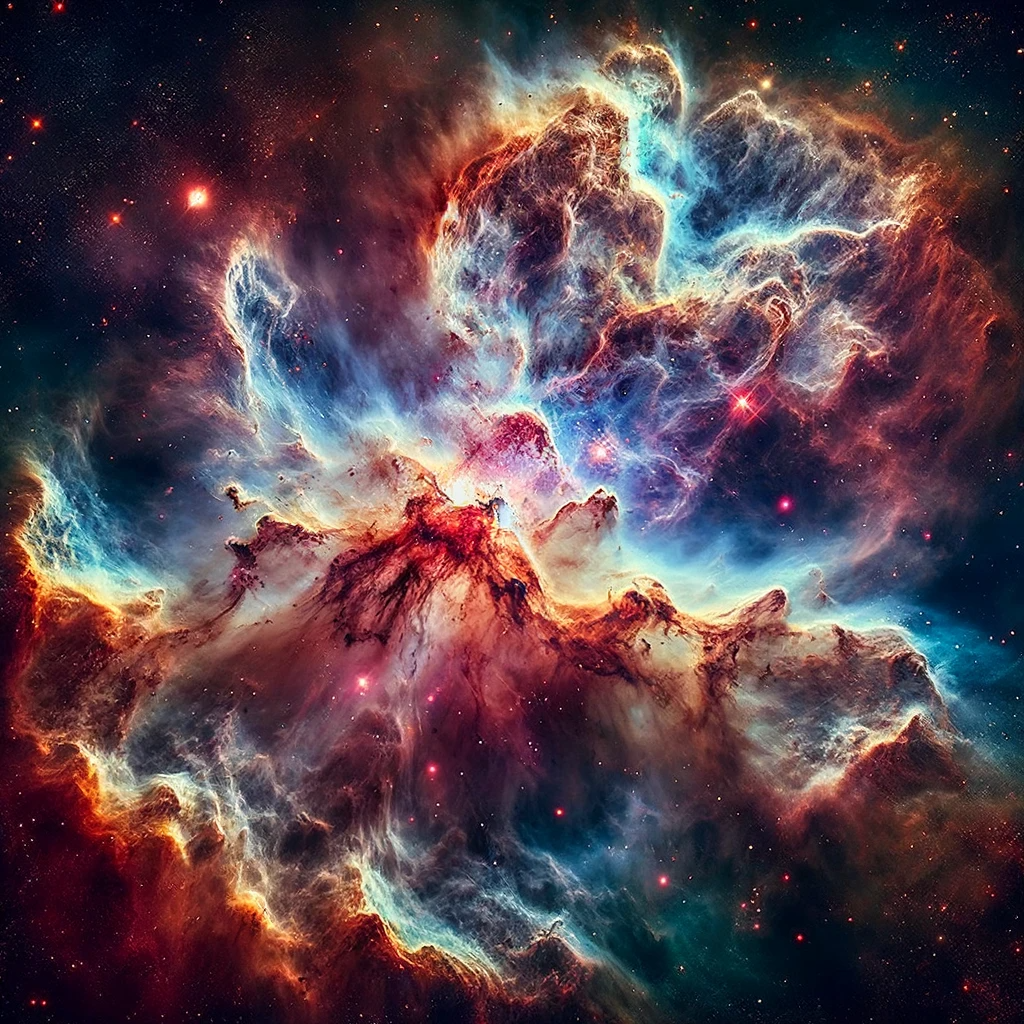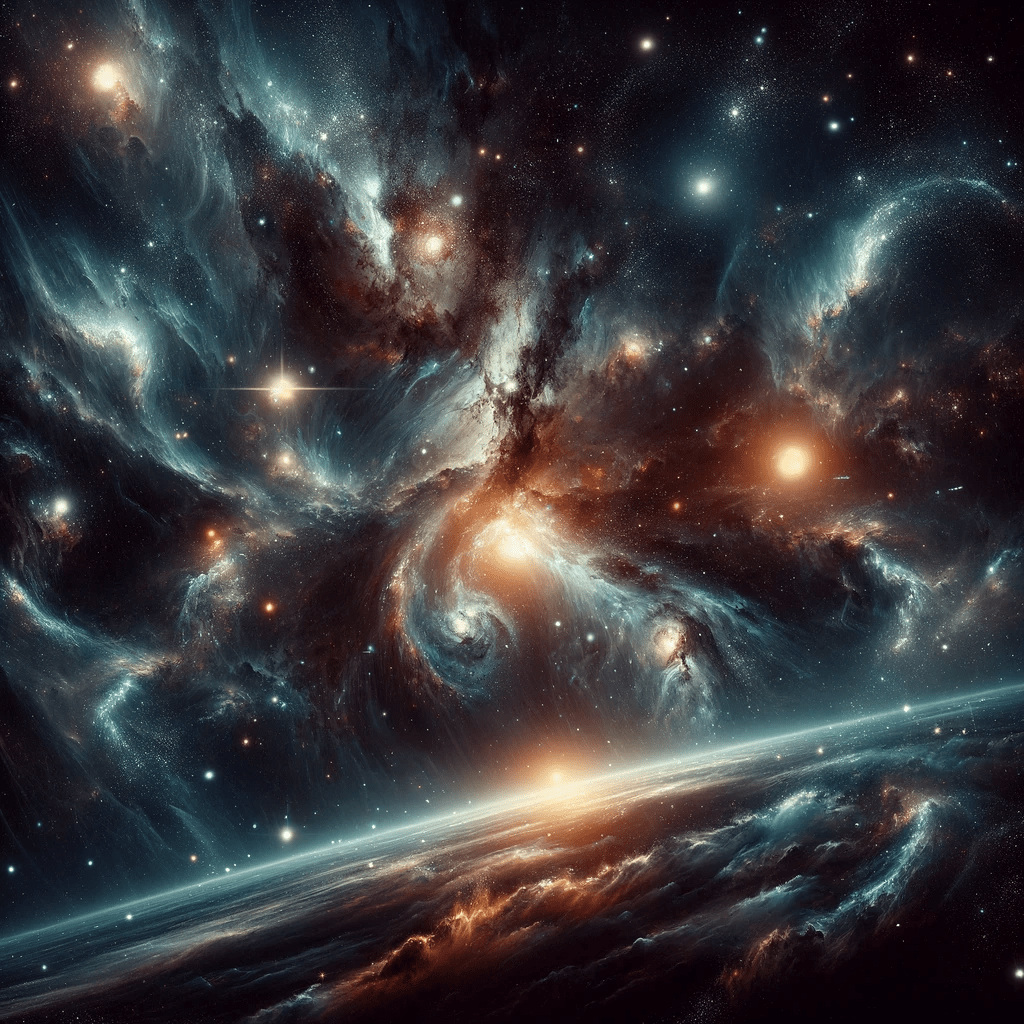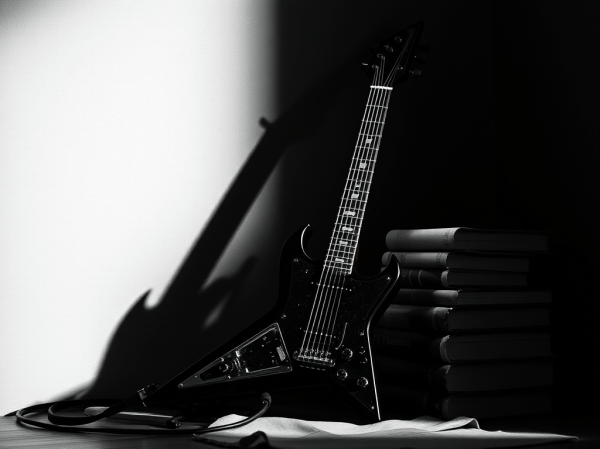
Blending Dark Dystopian Undertones with Progressive Elements

As I dive into my latest musical project, I find myself reflecting on the path that’s led me here. The new music I’m creating can be described as diverse, progressive, melancholic melodic death metal, blending growling and clean vocals. In a way, it’s a return to the adventurous musical spirit Eternal Tears of Sorrow had in the 90s. I feel the same innocence and energy I had at that time.

The 90s were a defining decade for me, shaping my musical and literary influences. I delved into melodic death metal, progressive metal, and science fiction—genres and themes that have stayed with me ever since. I discovered artists who would profoundly impact my creative direction. These included Devin Townsend and Anneke van Giersbergen with The Gathering. I also explored dystopian literature like 1984 and Fahrenheit 451. These influences have always been a part of me, even if they couldn’t fully manifest within EToS.

EToS was a collective effort, with our music being a blend of everyone’s ideas and preferences. This collective approach was rewarding but also limiting. Now, with the band on hiatus, I’ve found the freedom to explore new sonic territories that show my true self.

Books (and TV shows) like Good Omens and Station Eleven have also deeply influenced this new chapter. Good Omens taught me about the melancholic balance between light and dark. This contrast is something I’ve always explored in my music. Station Eleven resonated with its message that “survival is insufficient,“. It emphasised the importance of art and beauty, especially in dire times. These themes are guiding my current work, which seeks to blend progressive elements with darker, dystopian undertones.

This project marks my first thematic album, and it’s a thrilling challenge. It’s about rediscovering that sense of innocence and curiosity in songwriting. It’s about exploring uncharted creative spaces. It’s about weaving together the diverse influences that have shaped me. There are echoes of my past work. This new venture is about pushing boundaries. It’s about seeing where this renewed creative freedom takes me.

I’m eager to share more as this journey unfolds. The path ahead is filled with unknowns, but that’s what makes it so exciting.
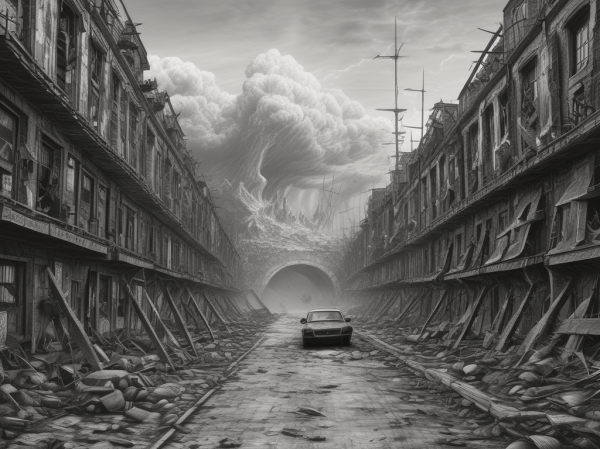
Melancholic Melodies, Melancholic Themes

Have you ever had an idea strike you out of nowhere, like a lightning bolt during a quiet coffee break? Earlier this week, that’s exactly what happened to me. As I sipped my morning coffee during a work day, the overarching theme for my forthcoming album suddenly crystallized in my mind.

For the past year, I’ve been exploring various themes and concepts. From apocalyptic visions to intimate fears and sci-fi epics, I’ve tried them all. Yet, each idea felt incomplete, like a melody without with a slightly wrong chord progression. Writing new songs has been a cakewalk, but the big question remained: what do I truly want to say with this album?

I can’t divulge too much about the theme yet, but I can reveal that it perfectly complements the melancholic melodies I’ve been crafting. It’s dystopian, not in a hard sci-fi way, but through a psychological lens that examines a dystopian situation.

This creative exploration has taught me that creativity isn’t always a straight path. Sometimes, it’s a winding road filled with echoes of what might be. As I prepare to write more music this weekend, I’m also ready to immerse myself in the sounds that have always fueled my passion.

What themes resonate with you in music? How do you connect with the melodies and stories woven into albums?

Or: when listening to an album, do you care about the theme and the lyrics at all?

Doctor Who Series 14: New Doctor Ncuti Gatwa and Exciting Storylines

Doctor Who‘s brand new series has ended, and it’s left fans buzzing. Some call it season as it was sort of a reboot, but let’s be real, most of us call it series 14. This series was a game-changer, introducing Ncuti Gatwa as the 15th Doctor and marking the triumphant return of Russell T Davies since series 4. So, we’ve got something old (the Doctor), something new (the new Doctor), something borrowed (the villain; from the 4th Doctor stories), and something blue (the TARDIS, obviously).

In the world of Doctor Who, fans are split between Team Russell T Davies (series 1-4) and Team Steven Moffat (series 5-10). Each has their unique flair: Davies is a master at character creation, while Moffat spins intricate, mind-bending tales. Personally, I’m a fan of both. My top episodes were penned by Moffat but produced under Davies: “Blink,” “The Empty Child,” “The Doctor Dances,” “Silence in the Library,” and “Forest of the Dead.”

River Song fans, it’s time to say it: Spoilers!

How does series 14 stack up against the previous 13 “Nu-Who” series?

Surprisingly, it’s a hit. Sure, there were a couple of duds: “Space Babies” was cringe-worthy, and “Dot and Bubble” was a snooze-fest. But then, we had three absolute gems: “73 Yards” and the two-part finale. The rest of the episodes were decent, with “The Devil’s Chord” having its moments.

Getting back to Moffat for a moment: he returned to write an episode this series, titled “Boom.” It was good but not his finest work. It felt like a high-quality filler episode, missing that extra depth to make it a classic. The idea of the Doctor sitting on a landmine for the most of the episode is intriguing in theory, but in practice, it felt a bit flat.

The 14th series mainly focused on the new Doctor and his companion, Ruby Sunday, and her mysterious backstory. So, let’s dive into those.

First up, the Doctor. Ncuti Gatwa was born to play the Doctor. His portrayal is electrifying, brimming with energy, emotions, and a dash of unpredictability. He’s like a cocktail of the 10th and 11th Doctors, with his unique twist. He’s a child at heart and a 2000-year-old Time Lord rolled into one.

Now, let’s talk about Ruby Sunday. The central mystery was her unknown mother. The Doctor saw her but couldn’t see her face. Ruby also glimpses her mother but with the same result. Finally, in the two-part finale, a DNA test reveals the truth, thanks to UNIT‘s superior tech, making Davina McCall’s team look like amateurs (“The Church on Ruby Road”).

But here’s the kicker: in “The Church on Ruby Road,” Davina’s team couldn’t trace Ruby’s lineage, suggesting she had no earthly relatives, hinting she might be an alien. Yet, she turns out to be the daughter of two ordinary humans. Plot hole alert! This contradiction is a bit like Rey’s parentage reveal in Star Wars—initially mysterious, then mundanely human. A bit boring…

Could this plot hole have been fixed? Yes. Ruby could’ve been from the distant past or future, making DNA matches impossible. Or, she could’ve been a paradox, with no DNA matches because her mother was, well, herself. Sometimes, keeping secrets is more thrilling, just like the Doctor’s true name.

Regardless, Ruby Sunday shines as a companion. Millie Gibson delivers a stellar performance, especially in “73 Yards,” a Doctor-Lite episode that leaves just enough mystery to keep us hooked. Some despise ambiguous plots, but I adore them.

Overall, series 14 was a delightful surprise. A mix of bad, average, and fantastic episodes, but the overall vibe was positive.

Now, I’m eagerly awaiting the Christmas 2024 special “Joy to the World,” penned by Steven Moffat and starring Bridgerton’s Nicola Coughlan as the companion. It promises to be a festive treat. Only six months to go!

Nebula Arcana

In the year 2047, humanity gazed upward to witness a celestial enigma, the Nebula Arcana. A sprawling cloud of interstellar dust and gas, it appeared seemingly out of nowhere, perplexing astronomers and cosmologists across the globe. Its presence was a riddle wrapped in a cosmic enigma, and its secrets were about to unravel the very fabric of human understanding.

The first hint that Nebula Arcana was more than a mere astral phenomenon came when Dr. Evelyn Reyes, a prominent astrophysicist, detected an anomalous signal emanating from its core. This wasn’t the random noise of the cosmos; it was structured, deliberate, and unmistakably the product of intelligent design. The world watched with bated breath as scientists embarked on the monumental task of decoding the message.

Months turned into years, and the first layer of the message was deciphered. It was a key, a guide to unraveling the next layer. The scientific community was mobilized on an unprecedented scale, with millions of minds from every corner of the globe joining the effort. The message was a fractal, each layer more complex than the last, a labyrinth of information unfolding endlessly before them.

As the work progressed, the message of Nebula Arcana became a cultural and philosophical lightning rod. Religious groups proclaimed it to be divine communication – some saw it as a message of hope from a benevolent deity, others as a dark omen or a test of faith. Visionaries and futurists speculated about advanced alien technologies and knowledge that could catapult human civilization forward by millennia.

Yet, as the final layer was unraveled, the truth of Nebula Arcana was revealed, not as a gift, but as a somber warning. The nebula was the remnants of a once thriving civilization, a species whose intellect and technological prowess rivaled and even surpassed humanity’s own. In their hubris, they had committed unfathomable errors, destabilizing their sun, and sealing their fate.

In a desperate, poignant attempt to preserve their legacy and caution others, they had constructed millions of satellites, broadcasting their story to the cosmos before their sun went supernova. This cataclysmic event, which had occurred millions of years ago, was now visible from Earth as the hauntingly beautiful Nebula Arcana.

The revelation was humbling and terrifying. Humanity was left to grapple with the knowledge that the nebula was not a harbinger of advancement, but a monument to a fallen civilization—a mirror reflecting their own potential for greatness and for catastrophic failure.

Nebula Arcana, once believed to be a trove of sacred, hidden knowledge, became a solemn reminder of the perils of technological arrogance and the fragility of life in the vast, indifferent cosmos. It stood as a testament to the importance of stewardship, not just of our planet, but of our place in the universe. The message, encoded in layers of complexity, ultimately imparted a simple truth: with great knowledge comes great responsibility.

And so, as humanity looked up at the remnants of a civilization lost to time, they understood that the nebula’s true arcana was not in the secrets it held, but in the warning it imparted—a warning that would echo through the ages, a beacon guiding humanity on its continued voyage among the stars.

Embracing Change in Doctor Who’s New Era

Doctor Who has once again proven its remarkable ability to evolve and captivate, a testament to its status as a stalwart of British science fiction. The series has long mastered the art of reinvention, a trait that keeps it both relevant and beloved.

The 13th Doctor, portrayed by Jodie Whittaker, introduced a divisive yet intriguing narrative twist: the Doctor’s adoption from an unknown universe. This bold storytelling choice added a layer of mystery and complexity, enriching the Doctor‘s enigmatic past. (Some viewers were not fond of that plot twist, yet I personally found it to be quite a clever development in the storyline.)

Russell T Davies‘ return heralded a renewed energy, evident in the 2023 Christmas Special, “The Church on Ruby Road.” The debut of Ncuti Gatwa as the 15th Doctor marked a new chapter, brimming with vibrancy and potential. Gatwa‘s portrayal has been described as a “perfect gift,” refreshing the character and the series with a dynamic presence.

The special’s narrative, noted for its blend of fantasy elements, including goblins and skyship adventures, indicates a comfortable shift for the show. It aligns with Doctor Who’s tradition of blending various genres, making the series continuously engaging and surprising. The shared background of adoption between the Doctor and his companion Ruby, played by Millie Gibson, adds depth to their relationship and opens avenues for potential storylines.

Critics have praised Gatwa and Gibson‘s chemistry, citing it as ideal for ushering in this new era. The special was seen as a welcoming entry point for new viewers while still satisfying long-standing fans. It managed to balance complex themes with the show’s human touch, a hallmark of Doctor Who’s storytelling​​​​​​​​.

One speculative aspect, personal to me, is the potential nod to Red Dwarf in Ruby‘s backstory. While this connection is purely speculative, it adds another layer of intrigue and depth to the narrative possibilities of the series. (One word: ”Ouroboros”).

As we look forward to the new series, the anticipation of how these narrative threads will unravel adds to the show’s appeal. The journey to uncover their origins and the impact of these revelations promise to add fascinating dimensions to the adventures of the Doctor and Ruby.

In summary, Doctor Who is setting out on a journey filled with renewal and discovery. The dynamic portrayal of the Doctor by Ncuti Gatwa, alongside Millie Gibson‘s Ruby, indicates a season that respects its past while boldly forging ahead into new territories. As viewers, we eagerly join them in the TARDIS, ready for the adventures and revelations that await in this timeless sci-fi epic.

Blog at WordPress.com.

Up ↑