The Mirror of Apocalypse: Understanding Our Fears

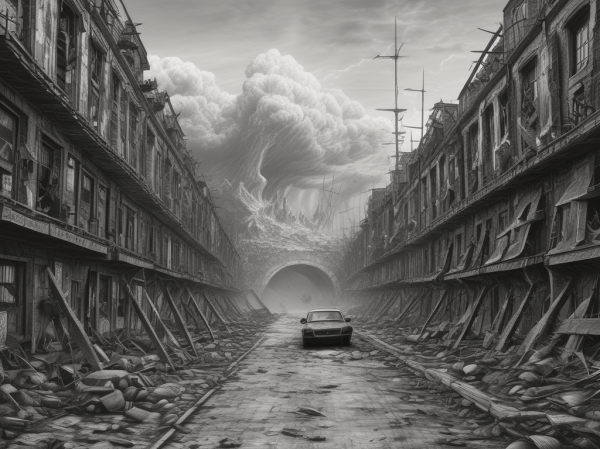
The apocalypse isn’t just a genre. It’s a mirror.

From the moment we figured out time moves ahead, we’ve been obsessed with the moment it stops. We gather around a campfire sharing myths. Or, we doom-scroll on Twitter/X. Humanity has a strange, persistent hobby: we love rehearsing our own extinction.

As I’ve dug into this research for my blog, I’ve made discoveries. It has fuelled the concepts behind Nebula Arcana. I’ve realized that the “End” is rarely about death. It’s a diagnostic tool for the living. The monsters we invent are jaguars, floods, or AIs. They tell us exactly what we are afraid of right now.

Here is a tour through the architecture of the end: and why we can’t look away.

1. The Universe as a Buggy Software Update

If you think the world feels unstable today, you should see the Aztec maintenance schedule.

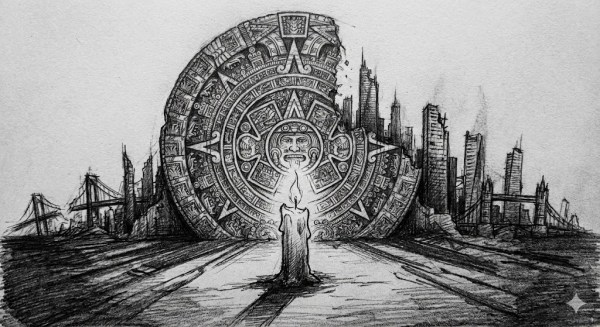
In the West, we view time as a straight line: start at Creation, end at Judgment. But for the Aztecs, the apocalypse wasn’t a future event: it was a recurring operational hazard. They believed we are living in the era of the Fifth Sun. The earlier four? Already destroyed.

And the techniques of destruction were terrifyingly specific:

  • Jaguars ate the first generation (giants).
  • Hurricanes wiped out the second (survivors turned into monkeys).
  • Fire rain ended the third.
  • A 52-year flood dissolved the fourth.

For the Aztecs, the universe was fragile. It required constant “fuel” (sacrifice) to keep the sun moving. If they stopped, the framework crashed. It’s a distinct contrast to the Hindu concept of time, which is less about fragility and more about unimaginable scale.

Hindu cosmology measures time in kalpas (4.32 billion years). The end isn’t a tragedy: it’s a factory reset. The universe dissolves into a singularity and expands again, like a divine lung breathing in and out. It suggests that destruction is just the price of admission for creation.

2. The Shift: From God’s Wrath to Human Error

Something shifted in 1945.

For millennia, the apocalypse was the domain of the divine. If the world ended, it was because we sinned. A deity would send a flood or a beast to hit the reset button. But after the atomic bomb, the narrative changed. We realized we didn’t need God to end the world anymore. We had the technology to do it ourselves.

This birthed the Secular Apocalypse, and suddenly, our fictional monsters changed:

  • The Nuclear Bomb gave us stories about radiation and the “long wait” for death (think On the Beach).
  • The Pandemic (zombies) gave us stories about the loss of self. The horror of the zombie isn’t that it kills you. It’s that it is you, repurposed by a virus or fungus.
  • Climate Change gave us the “slow violence” of the weather. This includes floods, freezes, and dust bowls. These events don’t care if you’re rich or poor.

We stopped fearing judgment and started fearing our own incompetence.

3. The “Pre-Apocalypse”: The Horror of Waiting

This is where it gets personal for me, and where the concept for Nebula Arcana really lives.

There is a sub-genre called the “Pre-Apocalyptic.” It’s not about the explosion: it’s about the Tuesday before the explosion. It’s the story of The Last Policeman. An asteroid is hitting in six months. A detective still tries to solve a murder. Why? Because he has to.

This specific anxiety: the knowledge of a finite clock: is the driving force behind our debut album, The Last Ember. We didn’t want to write songs about the fireball: we wanted to explore the 12 months before it. How do you go to work, love your partner, or pay rent when you know the date it all ends?

Research suggests we consume these stories as a form of “vicarious rehearsal”. We are practicing our emotions. In fact, a study showed that fans of apocalyptic movies coped better with the COVID-19 pandemic mental load. They had essentially “gamed out” the scenario in their heads already.

4. Interactive Doom: Why We Play with Fire

Video games have added a new layer: agency.

In a movie, you watch the hero survive. In games like Frostpunk or The Long Dark, you have to make the call.

  • Do you put children to work in the coal mines to keep the generator running? Will this save the city from freezing?
  • Do you share your food with a stranger when you’re starving?

These narratives force us to ask: Survival is insufficient. (A quote from Star Trek that became the mantra of the novel Station Eleven). If we survive the end but lose our humanity, did we actually make it?

Conclusion: The End is a Transition

We keep telling these stories, whether it’s the “Great Winter” of Norse mythology or the rogue planet in Melancholia. It’s not because we want to die, but because we want to know what matters.

The apocalypse strips away the noise. It removes the commute, the taxes, and the petty arguments. What remains is the raw core of existence. It forces us to ask: When everything else burns away, what remains?

That is the question I’m trying to answer with the music of Nebula Arcana. The end isn’t just a full stop. It’s a transition.

And if we have to face it, we should as well have a soundtrack. The Last Ember.
Blending Dark Dystopian Undertones with Progressive Elements

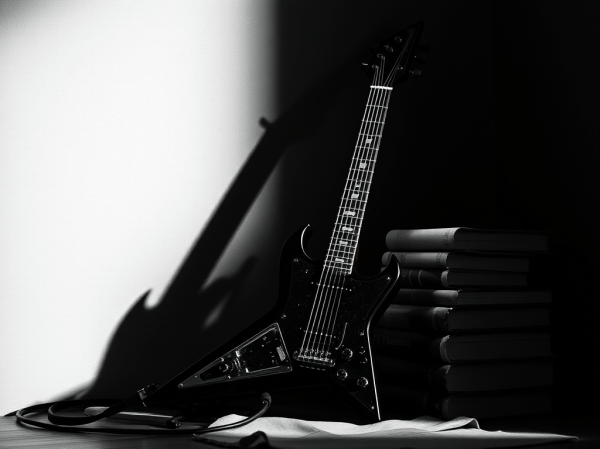
As I dive into my latest musical project, I find myself reflecting on the path that’s led me here. The new music I’m creating can be described as diverse, progressive, melancholic melodic death metal, blending growling and clean vocals. In a way, it’s a return to the adventurous musical spirit Eternal Tears of Sorrow had in the 90s. I feel the same innocence and energy I had at that time.

The 90s were a defining decade for me, shaping my musical and literary influences. I delved into melodic death metal, progressive metal, and science fiction—genres and themes that have stayed with me ever since. I discovered artists who would profoundly impact my creative direction. These included Devin Townsend and Anneke van Giersbergen with The Gathering. I also explored dystopian literature like 1984 and Fahrenheit 451. These influences have always been a part of me, even if they couldn’t fully manifest within EToS.

EToS was a collective effort, with our music being a blend of everyone’s ideas and preferences. This collective approach was rewarding but also limiting. Now, with the band on hiatus, I’ve found the freedom to explore new sonic territories that show my true self.

Books (and TV shows) like Good Omens and Station Eleven have also deeply influenced this new chapter. Good Omens taught me about the melancholic balance between light and dark. This contrast is something I’ve always explored in my music. Station Eleven resonated with its message that “survival is insufficient,“. It emphasised the importance of art and beauty, especially in dire times. These themes are guiding my current work, which seeks to blend progressive elements with darker, dystopian undertones.

This project marks my first thematic album, and it’s a thrilling challenge. It’s about rediscovering that sense of innocence and curiosity in songwriting. It’s about exploring uncharted creative spaces. It’s about weaving together the diverse influences that have shaped me. There are echoes of my past work. This new venture is about pushing boundaries. It’s about seeing where this renewed creative freedom takes me.

I’m eager to share more as this journey unfolds. The path ahead is filled with unknowns, but that’s what makes it so exciting.

Creative Fusion: The Symbiotic Relationship Between Music and Narrative

As summer gives way to autumn, I’ve found myself in a space where creativity is taking me in unexpected directions. It’s both exhilarating and mysterious, like catching glimpses of something just out of sight. Recently, this sense of intrigue has emerged in two distinct but strangely interconnected ways—through a story that’s been forming in my mind and the music I’ve been composing.

I’m not ready to reveal the details just yet, but there’s something about these new songs that feels closely linked to the story I’m beginning to explore. It’s as if the music and the narrative are communicating with each other, sharing secrets that I’m only now starting to grasp. The story itself is one of those ideas that seems to emerge from nowhere, almost demanding to be told. It’s a tale filled with mystery and wonder, where ordinary lives are touched by the extraordinary, and every moment seems to hold a hidden meaning.

What’s both fascinating and frustrating is how these creative threads—music and story—are starting to weave together, each subtly influencing the other. The process is moving at an irritatingly slow pace, even though everything is going according to plan. The songs I’m working on have taken on new depth, with melodies and themes that show the emotions and ideas within the story. Nonetheless, I’m still working on everything alone, focusing on writing the majority of the songs—at least the instrumental versions—before bringing anyone else into the project.

This journey is challenging, but it’s also incredibly rewarding. There’s a synergy here that’s pushing me to explore new creative territories, to dig deeper into both the music and the story, uncovering layers I hadn’t anticipated. I’m genuinely excited about where this creative fusion will take me, even if the road ahead is long and winding.

I hope to share more detailed news by next spring, the spring of 2025. By then, I aim to have a clearer picture of how these elements fit together and how this story, these songs, and this sense of wonder have all converged into something that feels almost like destiny. There’s so much ahead of me, so much to explore, and although the process is slow, I can’t help but feel a surge of excitement for what’s to come.

For now, I’ll keep the details under wraps. There’s still much to explore and understand. But I’m thrilled about the journey and where this creative fusion will lead. As I continue to write and compose, I’m finding that the most intriguing stories are often the ones that reveal themselves slowly, in their own time.

So, stay tuned. There’s more to come, and when the time is right, I’ll share more about this journey—how a story, a few songs, and a sense of wonder have all come together to create something that feels, in its own way, like destiny.

Melancholic Melodies, Melancholic Themes

Have you ever had an idea strike you out of nowhere, like a lightning bolt during a quiet coffee break? Earlier this week, that’s exactly what happened to me. As I sipped my morning coffee during a work day, the overarching theme for my forthcoming album suddenly crystallized in my mind.

For the past year, I’ve been exploring various themes and concepts. From apocalyptic visions to intimate fears and sci-fi epics, I’ve tried them all. Yet, each idea felt incomplete, like a melody without with a slightly wrong chord progression. Writing new songs has been a cakewalk, but the big question remained: what do I truly want to say with this album?

I can’t divulge too much about the theme yet, but I can reveal that it perfectly complements the melancholic melodies I’ve been crafting. It’s dystopian, not in a hard sci-fi way, but through a psychological lens that examines a dystopian situation.

This creative exploration has taught me that creativity isn’t always a straight path. Sometimes, it’s a winding road filled with echoes of what might be. As I prepare to write more music this weekend, I’m also ready to immerse myself in the sounds that have always fueled my passion.

What themes resonate with you in music? How do you connect with the melodies and stories woven into albums?

Or: when listening to an album, do you care about the theme and the lyrics at all?

Nebula Arcana

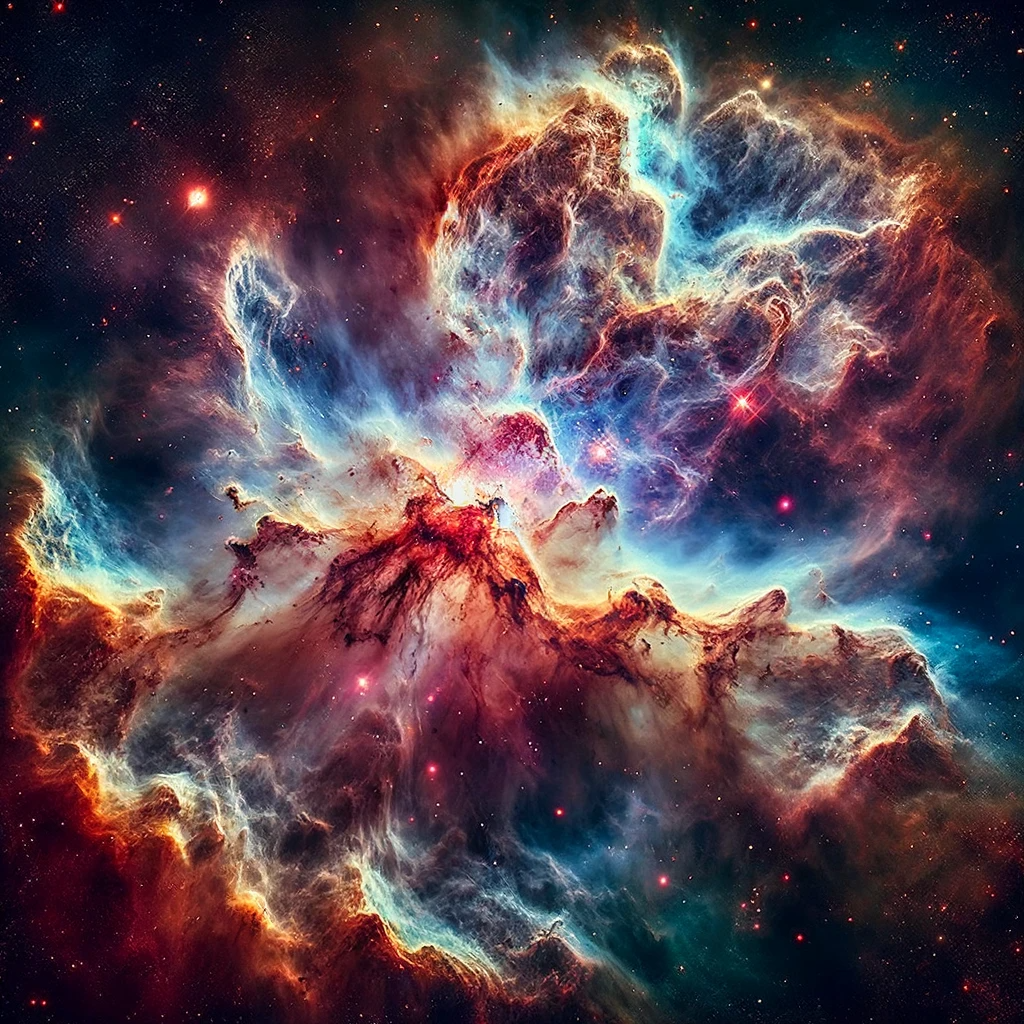
In the year 2047, humanity gazed upward to witness a celestial enigma, the Nebula Arcana. A sprawling cloud of interstellar dust and gas, it appeared seemingly out of nowhere, perplexing astronomers and cosmologists across the globe. Its presence was a riddle wrapped in a cosmic enigma, and its secrets were about to unravel the very fabric of human understanding.

The first hint that Nebula Arcana was more than a mere astral phenomenon came when Dr. Evelyn Reyes, a prominent astrophysicist, detected an anomalous signal emanating from its core. This wasn’t the random noise of the cosmos; it was structured, deliberate, and unmistakably the product of intelligent design. The world watched with bated breath as scientists embarked on the monumental task of decoding the message.

Months turned into years, and the first layer of the message was deciphered. It was a key, a guide to unraveling the next layer. The scientific community was mobilized on an unprecedented scale, with millions of minds from every corner of the globe joining the effort. The message was a fractal, each layer more complex than the last, a labyrinth of information unfolding endlessly before them.

As the work progressed, the message of Nebula Arcana became a cultural and philosophical lightning rod. Religious groups proclaimed it to be divine communication – some saw it as a message of hope from a benevolent deity, others as a dark omen or a test of faith. Visionaries and futurists speculated about advanced alien technologies and knowledge that could catapult human civilization forward by millennia.

Yet, as the final layer was unraveled, the truth of Nebula Arcana was revealed, not as a gift, but as a somber warning. The nebula was the remnants of a once thriving civilization, a species whose intellect and technological prowess rivaled and even surpassed humanity’s own. In their hubris, they had committed unfathomable errors, destabilizing their sun, and sealing their fate.

In a desperate, poignant attempt to preserve their legacy and caution others, they had constructed millions of satellites, broadcasting their story to the cosmos before their sun went supernova. This cataclysmic event, which had occurred millions of years ago, was now visible from Earth as the hauntingly beautiful Nebula Arcana.

The revelation was humbling and terrifying. Humanity was left to grapple with the knowledge that the nebula was not a harbinger of advancement, but a monument to a fallen civilization—a mirror reflecting their own potential for greatness and for catastrophic failure.

Nebula Arcana, once believed to be a trove of sacred, hidden knowledge, became a solemn reminder of the perils of technological arrogance and the fragility of life in the vast, indifferent cosmos. It stood as a testament to the importance of stewardship, not just of our planet, but of our place in the universe. The message, encoded in layers of complexity, ultimately imparted a simple truth: with great knowledge comes great responsibility.

And so, as humanity looked up at the remnants of a civilization lost to time, they understood that the nebula’s true arcana was not in the secrets it held, but in the warning it imparted—a warning that would echo through the ages, a beacon guiding humanity on its continued voyage among the stars.

Blog at WordPress.com.

Up ↑