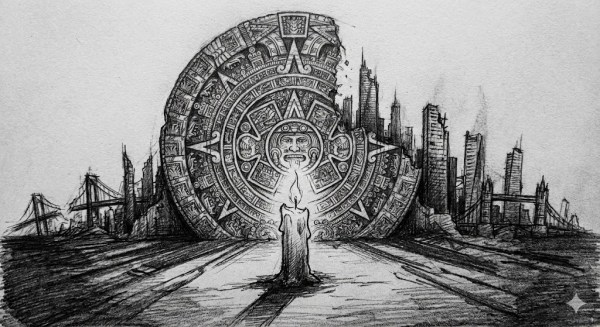
The Mirror of Apocalypse: Understanding Our Fears

The apocalypse isn’t just a genre. It’s a mirror.

From the moment we figured out time moves ahead, we’ve been obsessed with the moment it stops. We gather around a campfire sharing myths. Or, we doom-scroll on Twitter/X. Humanity has a strange, persistent hobby: we love rehearsing our own extinction.

As I’ve dug into this research for my blog, I’ve made discoveries. It has fuelled the concepts behind Nebula Arcana. I’ve realized that the “End” is rarely about death. It’s a diagnostic tool for the living. The monsters we invent are jaguars, floods, or AIs. They tell us exactly what we are afraid of right now.

Here is a tour through the architecture of the end: and why we can’t look away.

1. The Universe as a Buggy Software Update

If you think the world feels unstable today, you should see the Aztec maintenance schedule.

In the West, we view time as a straight line: start at Creation, end at Judgment. But for the Aztecs, the apocalypse wasn’t a future event: it was a recurring operational hazard. They believed we are living in the era of the Fifth Sun. The earlier four? Already destroyed.

And the techniques of destruction were terrifyingly specific:

  • Jaguars ate the first generation (giants).
  • Hurricanes wiped out the second (survivors turned into monkeys).
  • Fire rain ended the third.
  • A 52-year flood dissolved the fourth.

For the Aztecs, the universe was fragile. It required constant “fuel” (sacrifice) to keep the sun moving. If they stopped, the framework crashed. It’s a distinct contrast to the Hindu concept of time, which is less about fragility and more about unimaginable scale.

Hindu cosmology measures time in kalpas (4.32 billion years). The end isn’t a tragedy: it’s a factory reset. The universe dissolves into a singularity and expands again, like a divine lung breathing in and out. It suggests that destruction is just the price of admission for creation.

2. The Shift: From God’s Wrath to Human Error

Something shifted in 1945.

For millennia, the apocalypse was the domain of the divine. If the world ended, it was because we sinned. A deity would send a flood or a beast to hit the reset button. But after the atomic bomb, the narrative changed. We realized we didn’t need God to end the world anymore. We had the technology to do it ourselves.

This birthed the Secular Apocalypse, and suddenly, our fictional monsters changed:

  • The Nuclear Bomb gave us stories about radiation and the “long wait” for death (think On the Beach).
  • The Pandemic (zombies) gave us stories about the loss of self. The horror of the zombie isn’t that it kills you. It’s that it is you, repurposed by a virus or fungus.
  • Climate Change gave us the “slow violence” of the weather. This includes floods, freezes, and dust bowls. These events don’t care if you’re rich or poor.

We stopped fearing judgment and started fearing our own incompetence.

3. The “Pre-Apocalypse”: The Horror of Waiting

This is where it gets personal for me, and where the concept for Nebula Arcana really lives.

There is a sub-genre called the “Pre-Apocalyptic.” It’s not about the explosion: it’s about the Tuesday before the explosion. It’s the story of The Last Policeman. An asteroid is hitting in six months. A detective still tries to solve a murder. Why? Because he has to.

This specific anxiety: the knowledge of a finite clock: is the driving force behind our debut album, The Last Ember. We didn’t want to write songs about the fireball: we wanted to explore the 12 months before it. How do you go to work, love your partner, or pay rent when you know the date it all ends?

Research suggests we consume these stories as a form of “vicarious rehearsal”. We are practicing our emotions. In fact, a study showed that fans of apocalyptic movies coped better with the COVID-19 pandemic mental load. They had essentially “gamed out” the scenario in their heads already.

4. Interactive Doom: Why We Play with Fire

Video games have added a new layer: agency.

In a movie, you watch the hero survive. In games like Frostpunk or The Long Dark, you have to make the call.

  • Do you put children to work in the coal mines to keep the generator running? Will this save the city from freezing?
  • Do you share your food with a stranger when you’re starving?

These narratives force us to ask: Survival is insufficient. (A quote from Star Trek that became the mantra of the novel Station Eleven). If we survive the end but lose our humanity, did we actually make it?

Conclusion: The End is a Transition

We keep telling these stories, whether it’s the “Great Winter” of Norse mythology or the rogue planet in Melancholia. It’s not because we want to die, but because we want to know what matters.

The apocalypse strips away the noise. It removes the commute, the taxes, and the petty arguments. What remains is the raw core of existence. It forces us to ask: When everything else burns away, what remains?

That is the question I’m trying to answer with the music of Nebula Arcana. The end isn’t just a full stop. It’s a transition.

And if we have to face it, we should as well have a soundtrack. The Last Ember.

Nebula Arcana: Unveiling Melancholic Metal Concepts

TL;DR: My new band Nebula Arcana blends progressive, cinematic elements with melancholic melodic death metal. Our debut concept, The Last Ember, follows different people through the final 12 months before the world ends. First teasers are coming soon at nebulaarcana.com.

Endings aren’t endings at all. They’re transitions.

Nebula Arcana is that transition: a new dawn after the dusk.

Why a New Band — and Why Now

When Eternal Tears of Sorrow closed its book, the silence left space for something bolder. I wanted freedom: heavier dynamics, wider emotions, and fewer rules. If you’ve read my earlier reflections on growth and practice, you’ll recognise the pattern: reinvention through deliberate work and patience.

(Internal link idea: link “reflections on growth and practice” to your post Practice in Music and Meditation.)

The Concept: 

The Last Ember

What if the world were ending in 12 months, and everyone knew?

Each song follows a different person’s response: denial, fury, bargaining, grief, grace… And sometimes love. It’s less about apocalypse-as-spectacle and more about the emotions that rise when time finally feels finite.

Musically, expect progressive structurescinematic orchestrations, and a melancholic core, growls and cleans in dialogue rather than competition. There are glimmers of Opeth/Steven Wilson/OK Computer-era tension, filtered through the cold northern light that’s always been in my writing.

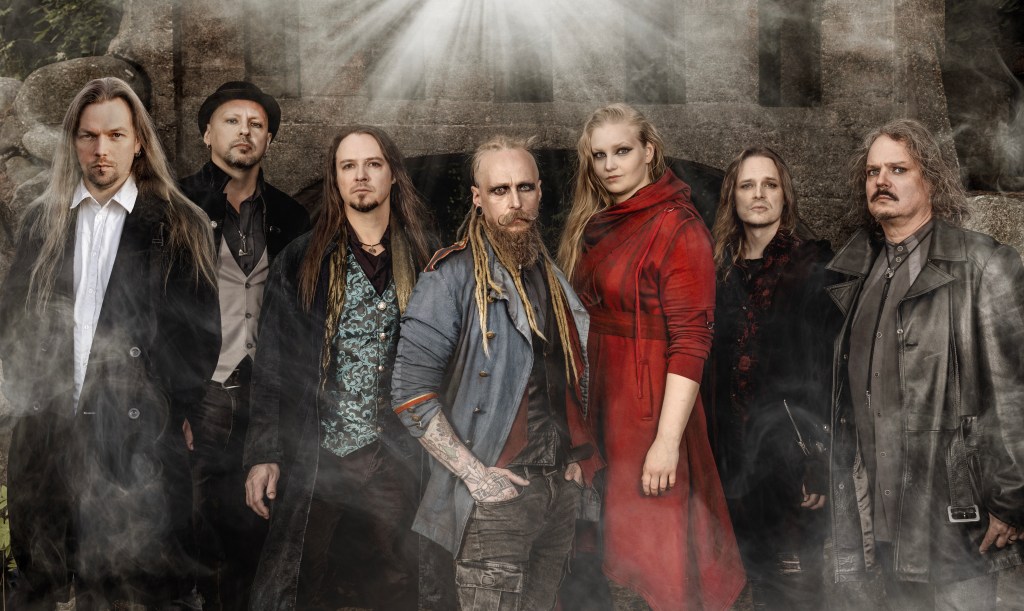
The Line-Up

  • Aso Brännkär — growl vocals
  • Jussi Matilainen — clean vocals
  • Harri Hytönen — guitar
  • Olli Hakala — bass
  • Ville Miinala — drums
  • Christian Pulkkinen — keyboards & orchestrations
  • Jarmo Puolakanaho — guitar, composition & production

What You’ll Hear (and When)

We’re deep into writing and pre-production. The album will be out next year.

Follow along at nebulaarcana.com and socials, the first embers are almost here.

Top Equipment for Home Metal Guitar Recording

In the not-so-distant past, capturing professional-quality metal guitar tones meant handling loud tube amps. It also required using oversized cabinets and fragile microphones. Often, there were complaints from neighbours. Modern digital modellers like the Line 6 Helix and the Kemper Profiler have changed that. High-end plugins from Neural DSP or STL Tones also contribute to this shift. Today, it’s entirely possible to record crushing, studio-ready metal guitar tracks from a modest home setup without sacrificing quality.

You could be recording melodic death metal rhythms, atmospheric blackened leads, or tight modern metal chugs. This guide walks through the entire process of crafting your guitar sound at a professional level. It covers everything from tone design to recording strategy, all without touching a single microphone.

The Setup: Gear and Signal Flow

Amp modellers like the Helix and Kemper are key to the home recording revolution. Plugin suites like Neural DSP’s Archetypes also play a significant role. These tools simulate amps, cabs, and pedals. They even simulate studio mic placements. This lets you go straight from your guitar to your DAW.

  • Helix doubles as an audio interface, offering a full pedalboard-to-amp-to-cab chain in one.
  • Kemper captures the tone of real amps via profiling. This allows you to record with any amp sound you can dream of.
  • (These are the amps I have, so I’m focusing on those two…)
  • Plugins like Neural DSP’s Fortin Suite or Archetype: Gojira let you build amp chains directly in your DAW.

The basic signal chain looks like this:

Guitar → Modeler/Interface or Audio Interface + Plugin → DAW

Always monitor your input levels—peaking between -10 dB and -6 dB is ideal. Avoid clipping at all costs. Use studio monitors or good headphones for accurate tone judgment.

The Foundation of Tone: Amp and Cab Choices

The amp model or profile forms the backbone of your tone. For metal, the usual suspects apply: 5150/6505, Mesa Dual Rectifier, ENGL, and Diezel. These are popular for a reason. They offer saturated distortion and focused mids. They also give the low-end punch that makes rhythm guitars slam.

But it’s the cabinet that truly defines the final tone. You’ll repeatedly hear this from pros. The speaker cab and mic model/IR account for 80% or more of your guitar tone. Use quality IRs of 4×12 cabinets loaded with Celestion V30s, often mic’d with an SM57 or MD421 equivalent.

If your modeler supports it, experiment with dual-cab setups (e.g., Helix dual cab block with different mic positions). Plugins like Neural DSP often include curated IRs designed to slot straight into a mix.

Boost and Gate: The Metal Guitarist’s Secret Weapons

Almost every modern metal rhythm tone includes a virtual overdrive pedal before the amp: usually a Tube Screamer-type boost. Set the drive low or off, level high, and tone around 6. This tightens the low end and adds clarity to palm mutes without adding unwanted gain.

A noise gate is essential too. Place it right at the start of the chain. Adjust threshold so it mutes unwanted hiss when you’re not playing but doesn’t choke sustained notes. If you’re using Helix or Neural plugins, try the Horizon Drive or Fortin Zuul gate emulations for high-performance results.

Rhythm Guitar Recording: Punch, Precision, and Power

Rhythm guitars need to sound massive, tight, and wide. Here’s how to achieve that:

Double-Tracking (Mandatory)

Record the same riff twice and pan one take hard left, the other hard right. This simple move transforms a mono tone into a wall of sound. The key is tight playing: each take should be nearly similar in timing and dynamics.

Quad-Tracking (Optional)

If you want an even thicker sound, record four takes (two per side). Use a slightly different tone on the second pair (e.g., different IR, different guitar volume) to prevent phasing.

Pro Tip: Never copy-paste one take to both channels. It only increases volume, not width.

EQ at the Source

Avoid excessive bass on the amp. Set bass around 4/10, mids around 6–7, and treble/presence to taste. Add a low-cut around 80 Hz and a gentle high-cut at 10–12 kHz to reduce rumble and fizz.

Lead Guitar Recording: Clarity, Character, and Width

Lead tones should cut through the mix and often gain from subtle effects.

  • Delay: A short delay (100–300 ms) with a low mix level adds space.
  • Reverb: Keep it subtle. Plate or room reverbs work well.
  • Mid Boost: Leads gain from more mids (700 Hz to 1.5 kHz) to stand above rhythm guitars.
  • Stereo Imaging: If you’re layering harmonized leads, pan them moderately apart (e.g., 30% L/R) or use stereo effects to create separation.

Effects During Recording: What to Print, What to Skip

Always print:

  • Noise gate
  • Boost/OD pedal

Optional:

  • Delay or reverb on leads (if essential to performance)

Avoid printing:

  • Compression (unless it’s part of a pedal effect)
  • Time-based effects on rhythm guitars
  • Modulation (unless used creatively for ambience)

Recording dry ensures flexibility during mixing. If in doubt, monitor with effects but record a dry signal.

DI and Reamping: Safety and Flexibility

Whenever possible, record a clean DI signal along with your processed tone. Both Helix and Kemper allow you to do this. If you’re using plugins, split your input in your DAW to record the raw signal.

This lets you:

  • Reamp later with a different tone
  • Add effects or correct tonal issues post-performance
  • Keep futureproofing in case you get new gear or plugins

Performance and Precision

Metal demands precision. Sloppy playing ruins even the best tones. Here are key tips:

  • Use fresh strings
  • Tune before every take (seriously)
  • Practice to a click track before recording
  • Don’t hesitate to punch in corrections

Take breaks often to avoid fatigue and keep your tone and timing sharp.

Final Tips for a Pro Sound

  • High-pass rhythm guitars around 80 Hz to avoid muddiness.
  • Low-pass around 10–12 kHz to tame fizz.
  • EQ cuts around 300–500 Hz if you hear mud or boxiness.
  • Double-check monitoring: use headphones and studio monitors to catch tonal flaws.
  • Save your presets and make notes about guitar settings so you can re-track later.

Conclusion

Recording metal guitars at home is no longer a compromise: it’s a creative advantage. With the right tools and techniques, you can produce tones that rival professional studios. Whether you’re a melodic death metal veteran, you might be exploring blackened atmospheres. Alternatively, you could be diving into technical death grooves. In any case, focus on thoughtful tone shaping. Guarantee a clean capture and deliver a confident performance.

Trust your ears. Play tight. And let your riffs speak for themselves.

Practice in Music and Meditation

A fellow goes to New York to attend a concert, but gets lost. 

He spots another fellow who’s carrying a violin case. 

“Sir, can you tell me how to get to Carnegie Hall?” 

The musician smiles and says, “Practice, practice, practice.”

If you’ve read my earlier posts, you already know I’m a believer in reinvention. I mentioned this in posts about saying goodbye to my former band. I also talked about it while starting a new band and the role of growth in both life and music. Reinvention not as a sudden shift, but as a slow, deliberate unfolding. Like songwriting. Like sitting in zazen meditation. Like playing guitar.

In a recent video, Brad Warner compared Zen practice to learning guitar. You can study theory, listen to great players, and understand it all intellectually. Still, unless you practice, none of it really becomes yours. That metaphor stuck with me, especially now.

Even though I’ve played guitar for over 35 years, I’ve never truly thought of it as a technical tool. It’s always been an extension of songwriting, a means of expressing emotion rather than showcasing skill. But this winter and spring, something changed. I started taking guitar lessons. It wasn’t to become a shredder. I wanted to push myself and my new band to a higher level. I want our music to evolve, and that means I have to evolve too.

Funny thing is, I practiced so much that I developed tendinitis in my left hand. So now I’m on a break. It’s frustrating, but also humbling. Because even in rest, there’s something to learn: about balance, moderation, and the limits of discipline.

That’s where the Zen metaphor comes full circle. Warner referenced a famous Zen story from Dōgen’sGenjōkōan“. It is about how air is ever-existing. Yet, unless you use a fan, you don’t feel it. Liberation, like air, is all around us. But without practice, without the fan, you don’t experience it. That’s how I feel about both music and meditation.

You don’t become a better musician by watching others. You become one by playing, by discovering your unique voice through repetition, mistakes, breakthroughs, and quiet progress.

And the same goes for Zen. You don’t “get” it through clever quotes or YouTube videos. You get it by sitting. Over and over again. Sometimes it’s clear, sometimes it’s muddy. But over time, it reveals something real.

In past posts, I’ve talked about embracing feedback. I’ve also discussed breaking free from genre expectations. Welcoming discomfort is part of creative growth. This is just another chapter in that same story. Whether it’s navigating the end of a beloved band or picking up new skills at 50, the lesson stays the same:

Practice is the path

So yeah, here’s to sitting. To playing. To not knowing. And to finding something true in the middle of it all, one breath, one note at a time.

The End of Eternal Tears of Sorrow: A New Beginning

Eternal Tears of Sorrow has officially come to an end. But in reality, we had already been inactive for two years. We tried writing new songs, but our standards had risen so high that nothing truly excited us. And if the passion wasn’t there, forcing it would have felt wrong.

This time, the decision was mutual: no drama, no conflict, just the realisation that it was time to move on. And that’s a good thing. Knowing when to let go is just as important as knowing when to push ahead.

That wasn’t the case the first time.

In short, our first split in the early 2000s was incredibly difficult for me. It was not just hard in music, but also in life. When writing Chaotic Beauty in 1999, we were full of energy. But by the time it came out, something had changed. The enthusiasm faded. Discussions about ending the band began. Suddenly, I felt like an outsider in my own band. This was the first group where I truly felt I belonged. And then it was gone, and I couldn’t help it. Bad communication? Definitely. EToS was always horrible at communicating.

I wish I had just asked, “What the hell is happening here?” But I didn’t. I was a different person then: a people-pleaser, someone who didn’t know what I really wanted. And even before our fourth album had even been released, the band was practically no more.

When EToS returned in 2004, the band didn’t feel the same, after all the things that had happened. We, the old members of the band, were no longer a tight-knit group. We were just bandmates, colleagues. And that’s how it remained until the end.

But I have no regrets. Our second era brought two incredible decades of music, unforgettable experiences, and a deep appreciation for everything we built. We toured the world, wrote music we were truly proud of, and connected with so many people through our songs. EToS will always be a part of me, and I’m grateful for every moment.

Now, for the first time, I feel free to create something new, without the weight of the past. If there’s one lesson I’m taking into my next band, it’s this: communication matters. A band is like any relationship, without open conversations, things can fall apart very quickly. This time, I’m making sure we get it right.

So here I am, ready for what’s ahead. EToS was an unforgettable chapter. Now it’s time to write a new one with everything I’ve learned. I have a fresh perspective and a renewed sense of purpose. And I can’t wait to see where this journey takes me next.

Eternal Tears of Sorrow: 30th Anniversary

It’s been some time since I last wrote about Eternal Tears of Sorrow, whether individually or on behalf of the entire band. Our seeming inactivity over the past decade plays a part in this silence.

Today, I bring you a mix of news.

First, the cheery part: “Good news, everyone!” (Those who have watched Futurama know that unfortunately, this phrase is often followed by bad news.)

This month marks three decades since the inception of EToS—certainly a cause for celebration! Or it is actually 32 years if you count from the early days of our forerunner, Andromeda, which began its journey in early 1992.

However, this is tempered by the less cheerful revelation that we have been on hiatus for about a year—a decision that we hadn’t publicly disclosed until now. Hence, there are no official celebrations for this milestone.

Each band member has their reasons for this break. Personally, I feel we might have reached our creative zenith; continuing as before might merely mean repeating ourselves in every conceivable way—songwriting, performing, recording, and the like.

Despite our efforts over the past few years to produce new songs, perhaps aiming for a single or an EP, these did not yield the hoped-for results. The new material seemed either too derivative of our past work or lacked the necessary collective enthusiasm, suggesting we might have exhausted our potential as EToS.

Yet, this period was far from fruitless for me. I’ve significantly honed my songwriting skills and learned to inject new life into our music. These lessons are invaluable as I embark on new projects. Each of us is now exploring different musical avenues through various bands and projects.

As for myself, I’ve been developing a new project since the onset of the pandemic, envisaging something that might echo EToS but with a heavier, more progressive, or even experimental twist. The project will certainly have stuff that hasn’t been possible with EToS, or stuff that I couldn’t even imagine during our active years. So, I’m filled with fresh ideas and enthusiasm for this new direction, exploring where these paths might lead. And this may not be the only project on the horizon for me—I have numerous new ideas that could take many different forms. Only time will tell.

So, I hope to release information of this band/project – or even more projects or bands – next year, as I turn 50 years then.

As to when the EToS hiatus might end, that remains uncertain. We will resume when we all feel the moment is right, perhaps with a reimagined sound and approach to ensure everything feels fresh and invigorating.

In the meantime, I invite our fans to stay connected through our official social media channels on Facebook and Instagram.

Thank you for your steadfast support over these three decades. It has been a profound honour to share this journey with you. Expect us when you see us.

Best regards,
Jarmo Puolakanaho & Eternal Tears of Sorrow

Time Passes by So Quickly…

As my 49th birthday looms on the horizon next month, I find myself reflecting deeply on the journey so far.

It’s been a rollercoaster of discovery. Looking back at the turn of the millennium, I realize how much I’ve learned. The band was my everything, a crucial part of my identity, but I’ve come to understand that such heavy reliance wasn’t the healthiest in the long run.

Back in ’99, being in a band felt entirely different. The internet was just a baby, and social media was nowhere on the horizon. We only had the Web, no Instagram, Facebook, TikTok, YouTube – not even Napster or Myspace for sharing our music. Bands weren’t tied down by the need for constant online promotion. Today, however, crafting an engaging online presence is crucial, a challenging shift for someone from the old school like me. But, every day is a chance to learn and adapt.

One reflection that’s particularly resonated with me was seeing our album ‘Chaotic Beauty‘ described as ‘Progressive Death Metal’ – a rare but insightful categorisation. This acknowledgment of the complexity and depth of our work has significantly influenced my recent musical endeavors.

Now, I’m quietly working on something new, a project that’s been simmering since the start of this decade. It pays homage to familiar territories while venturing into new realms, blending the old with the new. This venture feels like coming full circle, marrying past lessons with future opportunities. 🌌

Life, I’ve realized, is about continuous learning and adaptation. From the seismic shifts of the early noughties to navigating today’s digital landscape, every step has been preparation for this moment. As I stand ready to embark on this new chapter, I’m filled with excitement and a touch of nerves for the adventures that lie ahead.

I’m finally ready for this next journey. Allons-y, then! And stay tuned for more details in the near future.

My Instagram Account

In my Instagram journey (@goashem_music), I’ve embarked on a special series where I dive into the stories behind some of the most impactful songs I’ve had the pleasure of crafting for Eternal Tears of Sorrow, or at least those tracks where I’ve played a significant role. I kicked off this series with “Sinister Rain,” a track I personally consider among my finest creations. Following that, I explored “Autumn’s Grief,” a song that marks the exploration into the gothic dimensions of EToS’s sound.

For those intrigued by the creative process behind music, my Instagram page offers a glimpse into these tales.

In other news, I’m currently dedicating time to composing new music, aiming to enrich our discussions with fresh content beyond the classics I’ve previously discussed.

My Journey with the Kemper Profiler Player

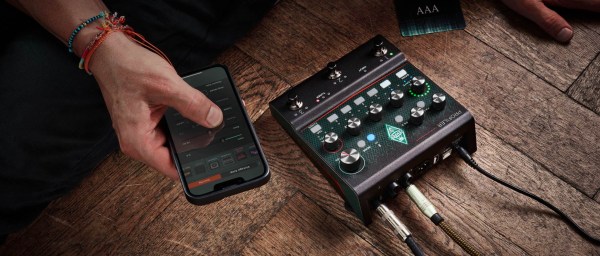
Last Friday, my musical toolkit expanded with the arrival of the Kemper Profiler Player, a step that’s set to significantly influence my path toward crafting new, heavier, and more progressive melodic death metal albums. This addition isn’t just about acquiring another piece of equipment; it’s about embracing a tool that promises to deepen the sonic textures and complexities of my music, particularly when used alongside my Line 6 Helix.

The Kemper offers a fresh perspective, not by replacing my Helix but by augmenting it, providing a rich tapestry of tones that complement the Helix’s capabilities. Together, they form a powerful duo that supports my vision of pushing boundaries in the melodic death metal genre. The compact nature of the Kemper is particularly appealing, granting me the flexibility to create and record music in a variety of settings, from the comfort of my home studio to the most remote locations where inspiration strikes, powered by my small solar station or the trusty, battery-operated Boss GT-1 pedal when needed.

While the Boss GT-1 has its place in my rig, especially in situations where power is scarce, its sonic output simply can’t compare to the depth and authenticity that the Kemper brings to the table. The Kemper’s ability to accurately capture and replicate the essence of real amplifiers is nothing short of revolutionary for my music, providing a foundation upon which I can build more complex, rich, and aggressive tones that are essential for the new directions I’m exploring in my albums.

Reflecting on my initial experiences with the Kemper Profiler Player, I’m filled with optimism. This piece of gear exceeds my expectations by offering not just portability and quality but also by being a pivotal element in my journey towards creating more intricate and heavy music. As I delve deeper into integrating the Kemper with the Helix, my excitement for the sonic possibilities they will unlock for my upcoming projects continues to grow. This is not just another step in my musical journey; it’s a leap towards realizing the soundscapes I’ve always imagined for my future albums.

Blog at WordPress.com.

Up ↑